Sciatica is a common cause of lower back and leg pain, affecting mobility, work performance, and overall quality of life. The condition is characterized by pain that radiates from the lower spine through the hips and down the leg, sometimes accompanied by tingling, numbness, or weakness. For many people, sciatica becomes a recurring or persistent issue rather than a short-term episode.
Conventional treatment options such as medication, physical therapy, injections, and surgery can be effective in certain cases. However, these approaches are not always appropriate, well-tolerated, or sustainable for long-term management. Concerns about side effects, downtime, and dependency have led both patients and clinicians to explore conservative, non-invasive solutions that address the underlying causes of sciatic pain.
Low-Level Laser Therapy (LLLT) for sciatica has emerged as a supportive conservative option. By targeting nerve inflammation and tissue irritation, LLLT offers a drug-free approach that can be integrated into comprehensive care plans without disrupting daily activity.
Understanding Sciatica and Why Pain Persists
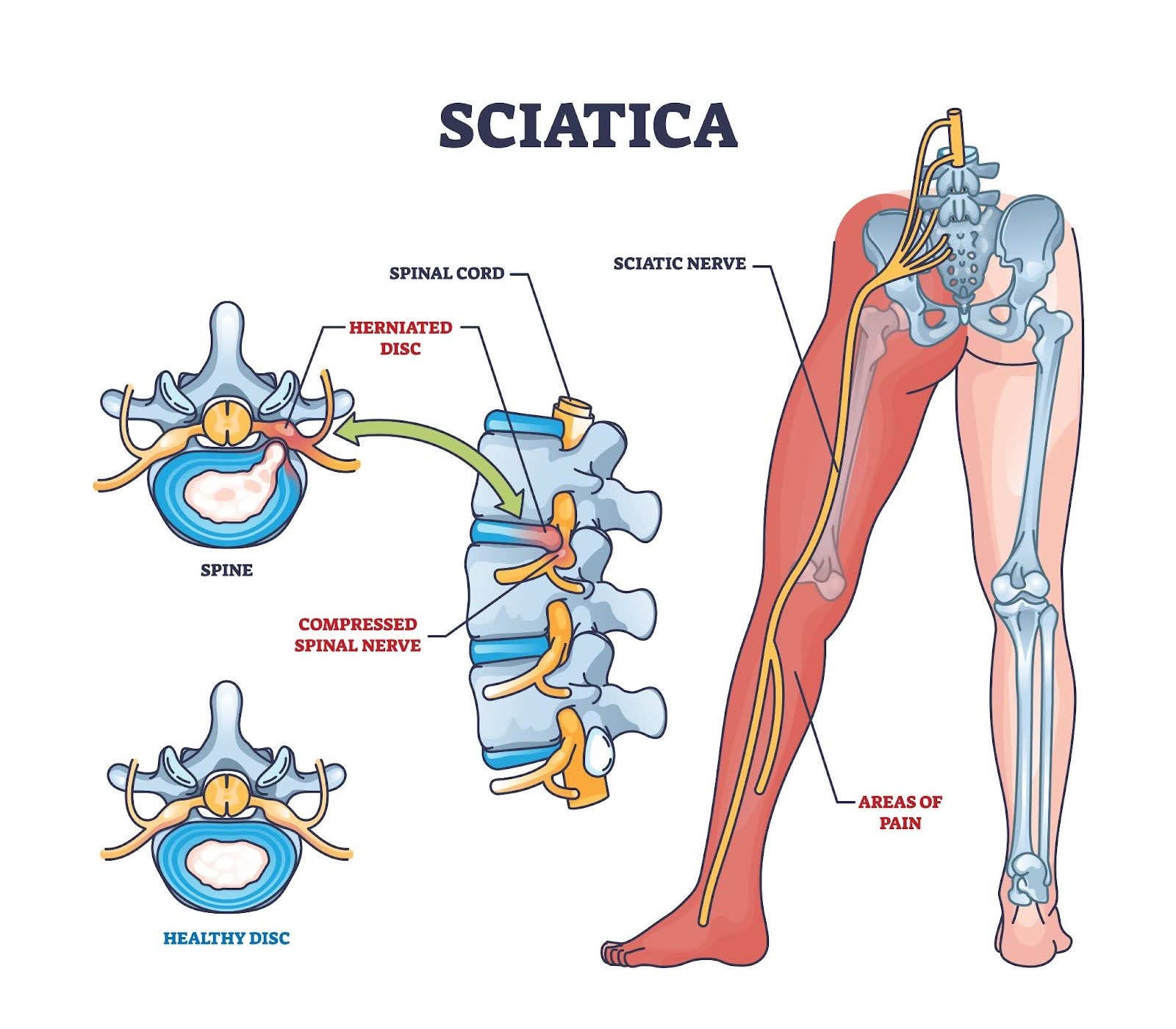
Sciatica is not a diagnosis in itself but a symptom resulting from irritation or compression of the sciatic nerve or its spinal nerve roots. The sciatic nerve is the longest nerve in the body, originating in the lower spine and extending through the pelvis, buttocks, and legs. When irritated, it causes pain, tingling, numbness and weakness along its pathway.
Common causes of sciatic pain include:
- Herniated or bulging lumbar discs
- Degenerative disc disease
- Spinal stenosis
- Osteoarthritis
- Muscle strain or myofascial tightness in the lower back/gluteal region
Inflammation plays a central role across these causes of sciatica. Swollen or irritated tissues put pressure on nerves, disrupt signaling, and prolong pain even after the initial trigger resolves. Because inflammation drives ongoing symptoms, effective sciatic nerve inflammation treatment must focus on reducing tissue swelling and nerve sensitivity rather than simply suppressing pain.
Effective conservative management goes beyond short-term pain relief. It aims to reduce inflammation, support tissue recovery, and restore movement, which are areas where Low-Level Laser Therapy may offer clinical benefit.
Limitations of Traditional Sciatica Treatments
Pain-relieving medications, such as NSAIDs or muscle relaxants, are commonly used to manage sciatica. While they may provide temporary symptom relief, they do not address the underlying mechanical or tissue issues. Long-term use may also increase the risk of gastrointestinal or cardiovascular problems or dependency.
Physical therapy is a cornerstone of sciatica care, but severe pain can limit participation. When discomfort restricts movement, patients are less likely to adhere to rehab programs, increasing the risk of chronic symptoms or incomplete recovery.
More invasive interventions, such as corticosteroid injections or surgery, may be appropriate for severe or progressive cases. However, they entail higher costs, procedural risks, and longer recovery time. For individuals with mild-to-moderate or recurrent sciatica, these options may not align with long-term management goals.
These limitations have increased interest in non-invasive sciatica treatments that support healing, reduce pain, and enable patients to stay active without added risk or downtime.
What Is Low-Level Laser Therapy (LLLT)?
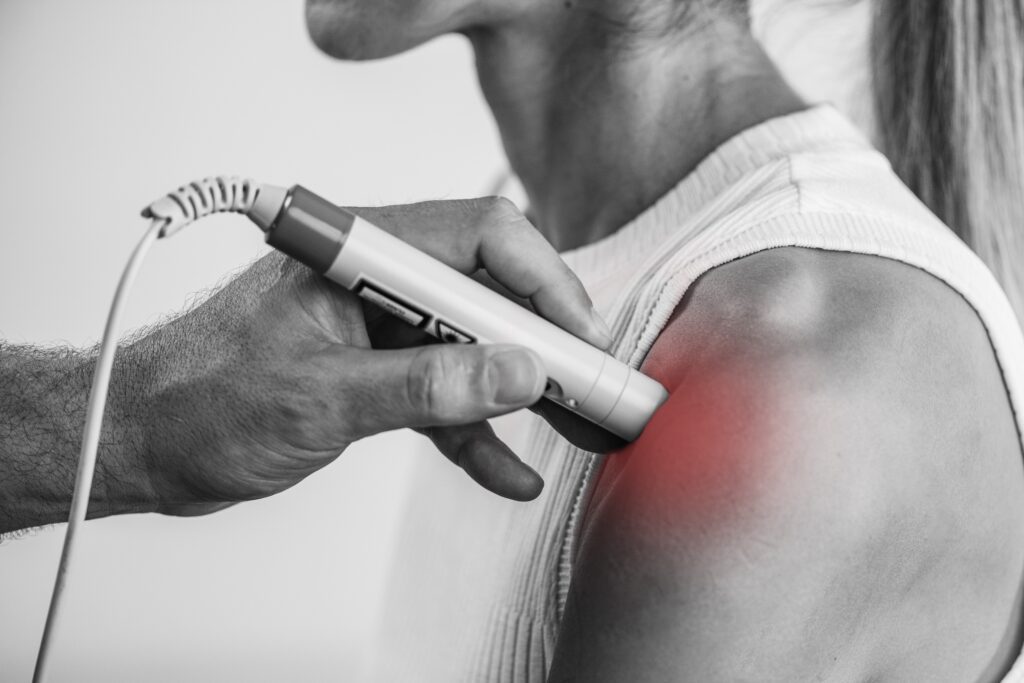
Low-Level Laser Therapy (LLLT), also known as photobiomodulation, uses specific wavelengths of light applied externally to targeted areas. It is a non-invasive, painless therapy that does not cut, heat, or damage tissue.
As a form of laser therapy for nerve pain, LLLT is used to support nerve comfort, tissue response, and circulation without invasive procedures. In sciatica management, low-level laser therapy focuses on reducing inflammation around irritated nerves and supporting recovery without medication or downtime.
The light penetrates the skin and interacts with mitochondria, supporting cellular energy, inflammation modulation, circulation, and tissue repair. Physical therapists use LLLT as an adjunct to standard care, often alongside physical therapy and rehabilitation exercises, to enhance treatment outcomes.
How LLLT Supports Sciatica Relief
Low-Level Laser Therapy (LLLT) offers a non-invasive approach to managing sciatica by addressing the underlying drivers of pain and functional limitation. It works not just to relieve symptoms but to support nerve health, tissue repair, and safe movement, which are key elements of sustainable recovery.
Modulating Nerve Inflammation
Inflammation around the sciatic nerve or its roots is a key cause of pain and limited functional movement. Inflamed tissues increase pressure and sensitivity, amplifying pain signals and restricting activity.
LLLT may influence cellular pathways involved in inflammation and healing, helping regulate inflammatory mediators and improve local microcirculation. Improved circulation delivers oxygen and nutrients while removing metabolic byproducts that worsen irritation.
By reducing inflammatory stress, LLLT creates a more favorable environment for nerve comfort and function, addressing the physiological causes of pain rather than simply masking symptoms.
Enhancing Tissue Recovery Around the Sciatic Nerve
Sciatic pain rarely occurs in isolation. Surrounding muscles, ligaments, discs, and connective tissues often contribute to persistent irritation. Tightness, reduced tissue resilience, and delayed recovery can perpetuate nerve compression even after the initial trigger resolves.
LLLT may boost cellular energy production and circulation in affected tissues, supporting soft tissue repair, reducing muscle tension, and improving tissue adaptability. Healthier tissues decrease mechanical stress on the nerve, making movement more comfortable and functional.
Combining LLLT with targeted stretching, strengthening, and postural correction further supports rehabilitation and enables patients to engage more effectively in exercises for long-term sciatica management.
Reducing Pain to Restore Movement and Function
Pain often discourages movement, yet activity is essential for recovery. Avoiding exercise can lead to muscle weakness, joint stiffness, and reduced spinal stability, increasing the risk of chronic symptoms.
By managing pain and inflammation, LLLT can help individuals move with greater comfort and confidence. Even modest reductions in discomfort improve adherence to physical therapy, walking programs, and daily activity.
Restoring movement supports circulation, neuromuscular control, and tissue resilience, making consistent participation in rehabilitation more achievable and promoting sustainable recovery.
Integrating LLLT into a Comprehensive Sciatica Care Plan
For individuals seeking drug-free sciatica pain relief, LLLT offers a non-pharmacologic option that supports recovery without systemic side effects. Treatments are brief, non-invasive, and require no recovery time, allowing patients to resume daily activities immediately.
LLLT is particularly appropriate for individuals with mild to moderate sciatica, recurrent symptoms, or pain that limits participation in rehabilitation. Its benefits are most pronounced when inflammation and tissue irritation are key contributors to symptoms. Professional evaluation is essential to determine suitability, with healthcare providers assessing symptom patterns, prior treatment response, and overall functional goals.
The therapy achieves optimal results when integrated into a comprehensive care plan. Clinicians often combine LLLT with:
- Physical therapy to restore mobility and strengthen supporting muscles
- Therapeutic exercise for core stability and flexibility
- Manual therapy to address soft tissue restrictions
- Chiropractic care for spinal alignment support
- Postural and ergonomic guidance to prevent recurring nerve stress
- Activity modification to ensure safe progression
Within this framework, LLLT enhances tissue response, reduces pain, and improves comfort, complementing other interventions and supporting sustainable recovery without added risk or downtime.
Setting Realistic Expectations for LLLT in Sciatica
LLLT is not an immediate solution, and results vary based on factors such as the underlying cause of sciatica, symptom duration, overall health, and adherence to the care plan. Some patients notice gradual improvement over several sessions, while others may require longer-term integration into their treatment.
Clear communication between healthcare professionals and patients is essential to establish realistic timelines and emphasize the importance of consistent participation. A healthcare professional should always evaluate persistent or worsening neurological symptoms to rule out conditions that may require more advanced intervention.
A Conservative Approach to Long-Term Sciatica Relief
Sciatica often becomes persistent when inflammation and tissue irritation limit movement and slow recovery. Lasting relief requires addressing these underlying causes rather than only masking pain. Low-Level Laser Therapy provides a non-invasive, drug-free approach that supports nerve comfort, promotes tissue healing, and restores functional movement without downtime.
When combined with guided rehabilitation and professional care, LLLT helps individuals stay active, follow treatment plans, and break the cycle of recurring pain. While outcomes vary, it offers a practical, conservative option for sustainable sciatica relief without medication or invasive procedures.
LLLT for Sciatica FAQs
Q1. What is low-level laser therapy (LLLT) and how can it help with sciatica?
Low-level laser therapy (LLLT), also called photobiomodulation, is a non-invasive treatment that uses specific wavelengths of light to support cellular activity, circulation, and inflammation modulation. In sciatica care, it may help by supporting comfort around irritated nerves and surrounding tissues as part of a conservative plan.
Q2. Can low-level laser therapy reduce sciatic nerve inflammation?
Sciatica symptoms are often linked to inflammation and tissue irritation near spinal nerve roots or along the sciatic nerve pathway. LLLT may support inflammation regulation and improve local circulation, which can help create a more favorable environment for nerve comfort and recovery. Results vary by individual and underlying cause.
Q3. How many sessions of LLLT are needed for sciatica relief?
There is no single session count that fits everyone. Some people notice gradual improvement over several visits, while others may need a longer course depending on symptom duration, severity, and contributing factors like mobility limitations or tissue tightness. A provider can recommend a plan based on response over time.
Q4. Is low-level laser therapy safe for sciatica and nerve pain?
LLLT is generally considered non-invasive and is commonly used under professional guidance. Individual suitability depends on medical history and symptom presentation, so evaluation by a healthcare professional is important, especially if symptoms are worsening or include significant weakness or numbness.
Q5. Does LLLT replace physical therapy, injections, or surgery for sciatica?
No. LLLT is typically used as an adjunct within conservative care. It may help reduce pain and inflammation so patients can better participate in physical therapy and movement-based rehab. Injections or surgery may be needed in more severe or progressive cases, and a clinician should determine the best approach.