|

Acupuncture
Acupuncture
A precise stimulus. The body’s own response.
You already practice this principle. Our lasers run on it.
Acupuncture delivers a precise stimulus at specific anatomy and trusts the body’s regulatory systems to answer. Low-level laser therapy operates on the same logic at the cellular level: photons instead of needles, mitochondria instead of mechanoreceptors, and a response the body generates itself — a modality that extends your treatment philosophy instead of competing with it.
- Non-thermal
- FDA-cleared for pain
- Needle-free option
- Same-visit
- No consumables
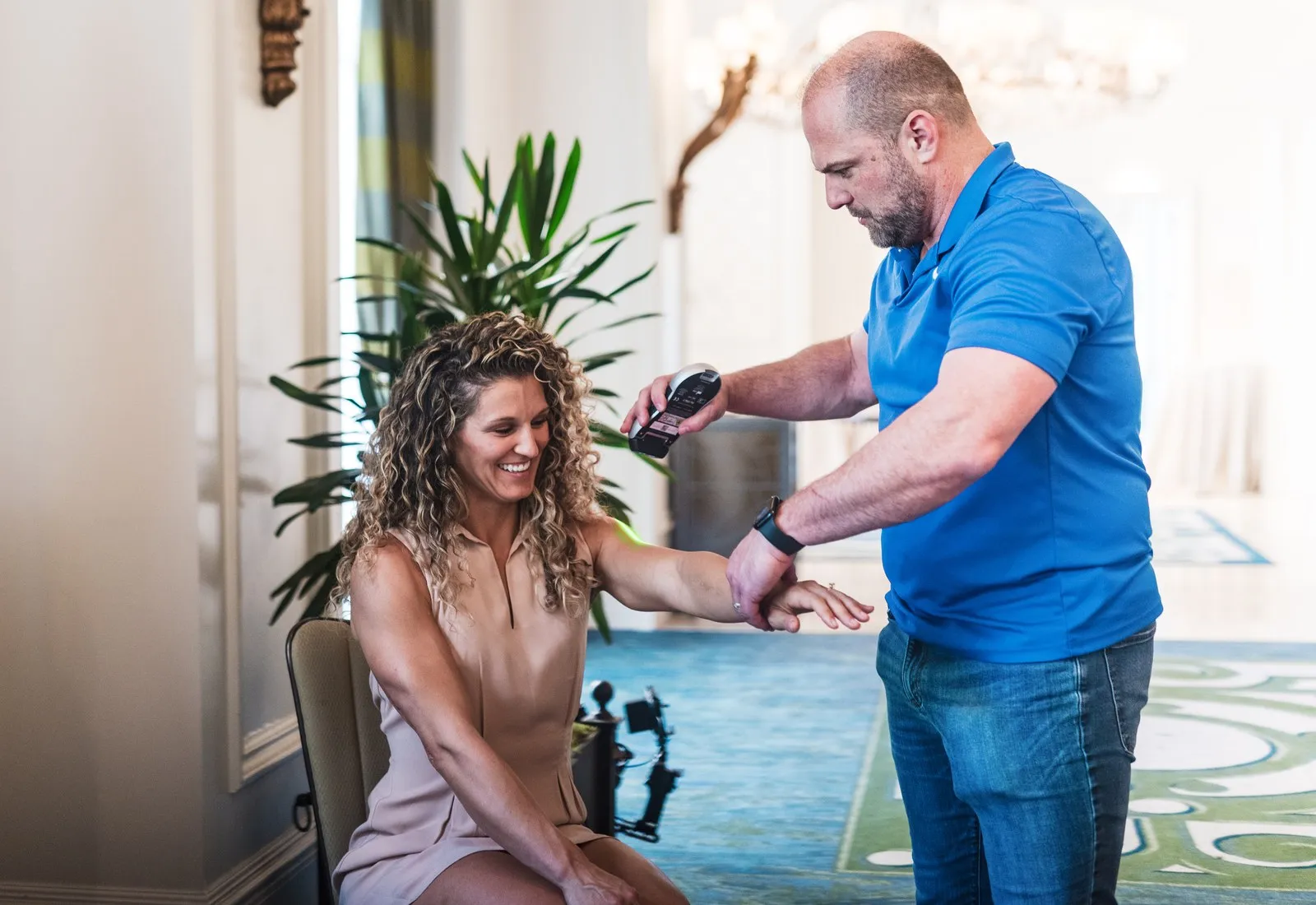
Cleared on level-1 evidenceEvery Erchonia FDA market clearance rests on double-blind, randomized, placebo-controlled trials — the standard your most skeptical referring physician respects.
1st
FDA market clearance ever granted for low-level laser therapy
25
FDA clearances since 1996, on double-blind, randomized, placebo-controlled trials
42,000+
Erchonia devices in the field
30
years in the human market — patients who could say whether it worked
Two modalities, one operating logic
Modulation, not override.
Every acupuncturist knows the difference between a therapy that suppresses a symptom and one that recruits the body’s capacity to regulate itself.
That distinction is exactly what separates low-level laser therapy from high-powered thermal lasers — and from most of what patients encounter in conventional pain care. Neither modality heats, cuts or numbs. Both deliver a small, exact input and let physiology do the work. That is why laser therapy sits naturally inside an acupuncture practice: not a gadget bolted onto a tradition, but the same clinical reasoning expressed through light.
| Acupuncture | Low-level laser therapy | |
|---|---|---|
| The stimulus | Fine needle at a precisely selected point | Coherent light at a precisely selected wavelength and site |
| The mechanism | Mechanical stimulus recruits nervous, connective-tissue and purinergic signaling responses | Photochemical stimulus recruits mitochondrial and cell-signaling responses |
| The dose principle | Point selection, depth, retention and manipulation determine the response | Wavelength, power and time determine the response — low doses stimulate, excessive doses inhibit |
| The outcome | The body regulates itself | The body regulates itself |
A small, precise input outperforming a large, blunt one. Your discipline was built on that idea.
The mechanism
How photobiomodulation works
What happens when low-level light meets tissue. Nothing is burned or heated.
01
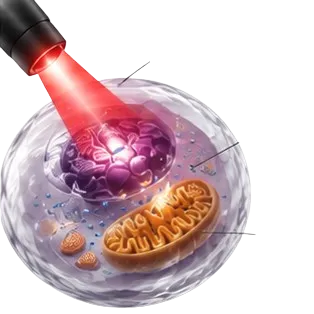
Absorption
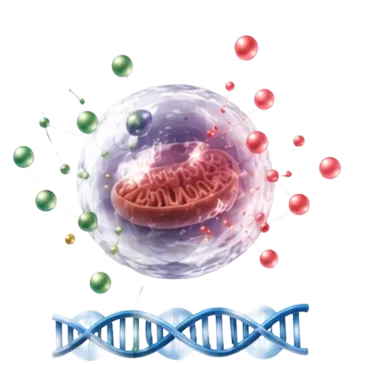
Photons are absorbed by chromophores in the cell — chiefly cytochrome c oxidase in the mitochondria. Absorption is wavelength-specific, which is why Erchonia engineers discrete violet (405 nm), green (520 nm) and red (635 nm) diodes rather than broad-spectrum output.
02
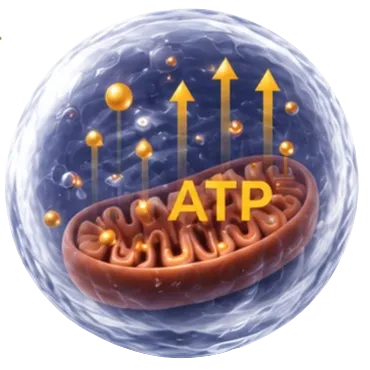
Energy production
Absorption drives ATP synthesis upward. The treated cell has more energy to do what it already does — signal and regulate.
03
Signaling
The same event releases nitric oxide and a brief pulse of reactive oxygen species — signaling molecules that shift gene expression in the treated cell.
04
A response beyond the beam
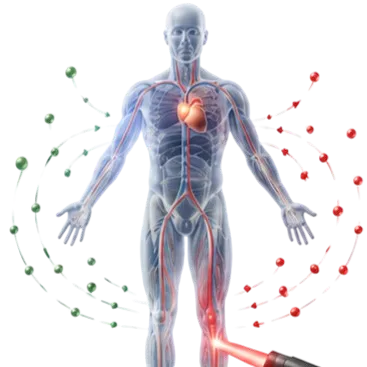
These mediators move beyond the treatment site, so measured effects aren’t confined to the spot under the laser. A systemic response to a local stimulus will sound familiar to any practitioner whose needling at ST36 produces effects far from the leg.
One of the best-documented mechanisms of acupuncture analgesia is purinergic signaling — ATP and adenosine released at the needled site. Photobiomodulation’s primary cellular event is increased ATP production. Two different stimuli, one signaling currency. The kinship isn’t marketing language. It’s biochemistry.
Why Erchonia
Why Erchonia, specifically
High-energy, not high-powered. The difference is the mechanism.
Power counts photons. Energy is what each photon can do.
A laser’s wattage measures photon quantity per second. A photon’s energy — set entirely by wavelength, measured in electron volts — determines whether it can drive a photochemical reaction. More photons don’t make each one more capable; they make tissue warmer. Class IV devices marketed on wattage deliver enormous photon quantities whose individual photons carry less energy; the dominant effect is thermal, and excessive dose inhibits the very response the therapy is meant to stimulate.
Erchonia builds high-energy lasers.
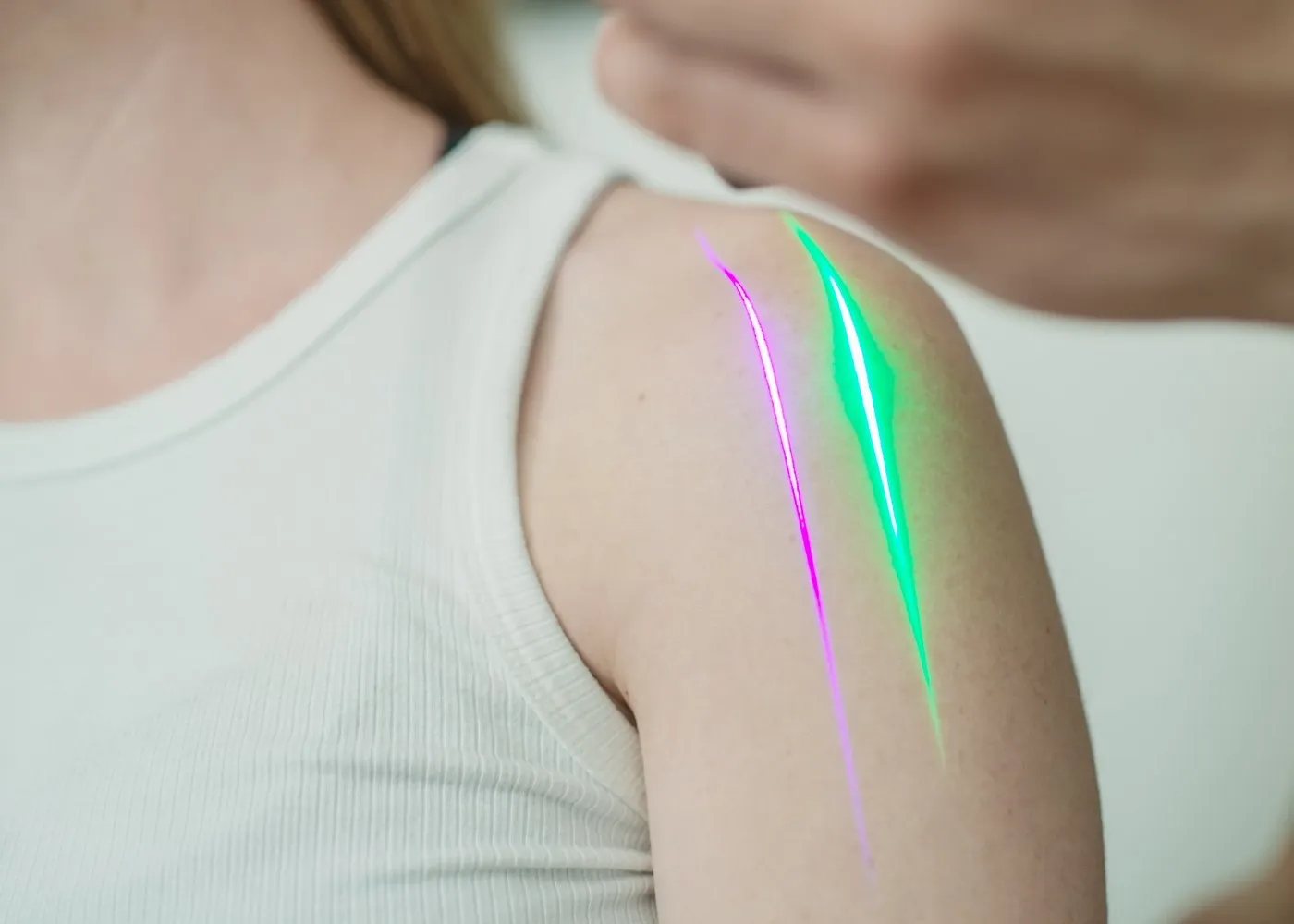
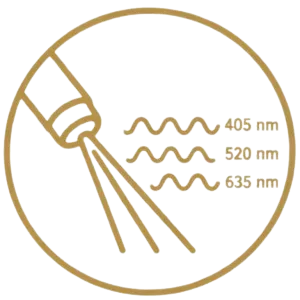
Shorter wavelengths carry more energetic photons: Erchonia’s 405 nm violet diode delivers ~3.06 eV per photon — over one and a half times the ~1.95 eV of 635 nm red, and well above infrared. Each diode is selected for chromophore absorption, driving the cascade at milliwatt power where the dose principle is respected by design. Line-generated beams apply that energy with the anatomical precision a point-based discipline expects.

Cleared on level-1 evidence.
Erchonia earned the first FDA market clearance ever granted for low-level laser therapy and has built 25 clearances since 1996 on double-blind, randomized, placebo-controlled trials — the standard your most skeptical referring physician respects. You can hand an MD the trial design, not a testimonial.

In the treatment room
Photons instead of needles. The same clinical reasoning.
How practices integrate it
Three models, from your treatment room
A needle-free option, a same-visit layer, or a defined series.
01
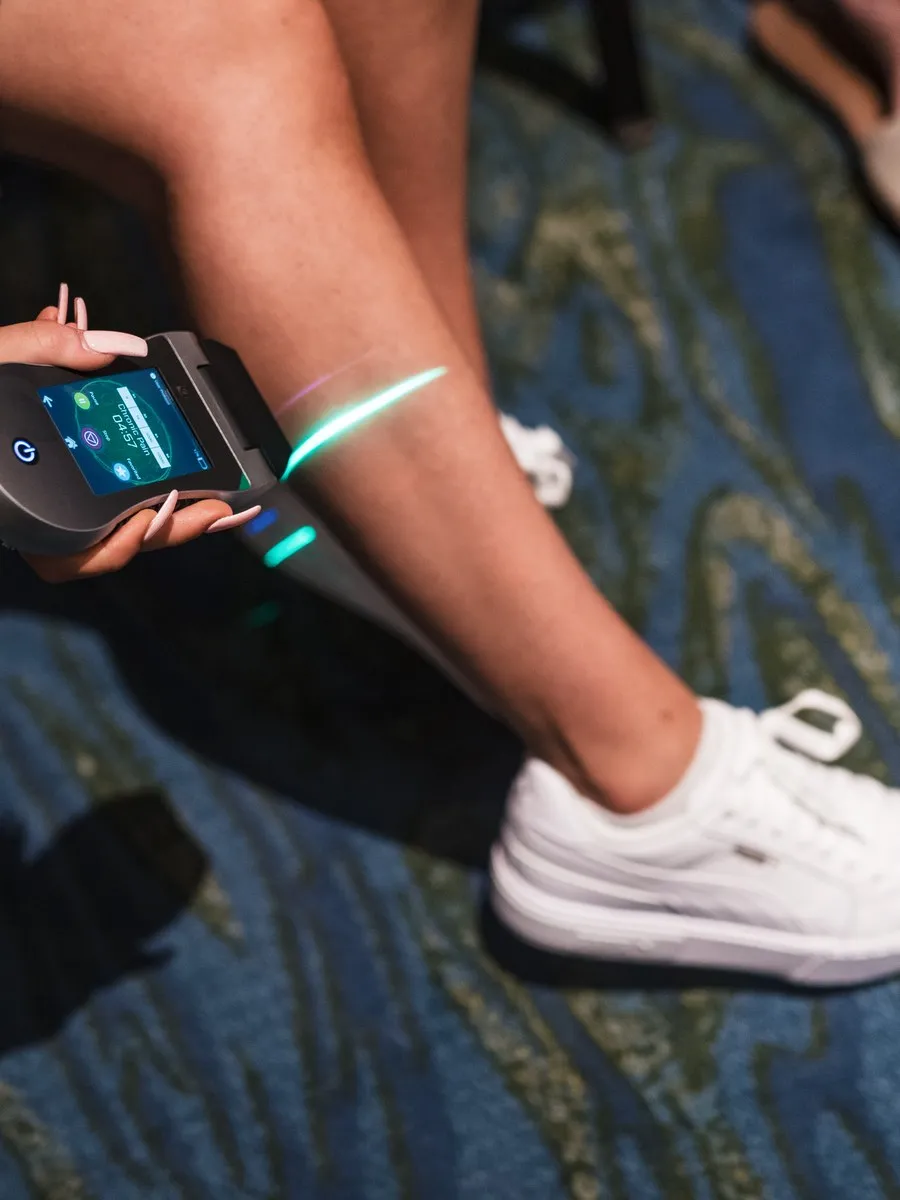
A needle-free option within cleared indications
For patients apprehensive about needles — or when needling a region isn’t appropriate that day — the laser gives you a non-invasive modality within its cleared pain-relief indications. The patient who would have walked out becomes a patient you can treat.
02
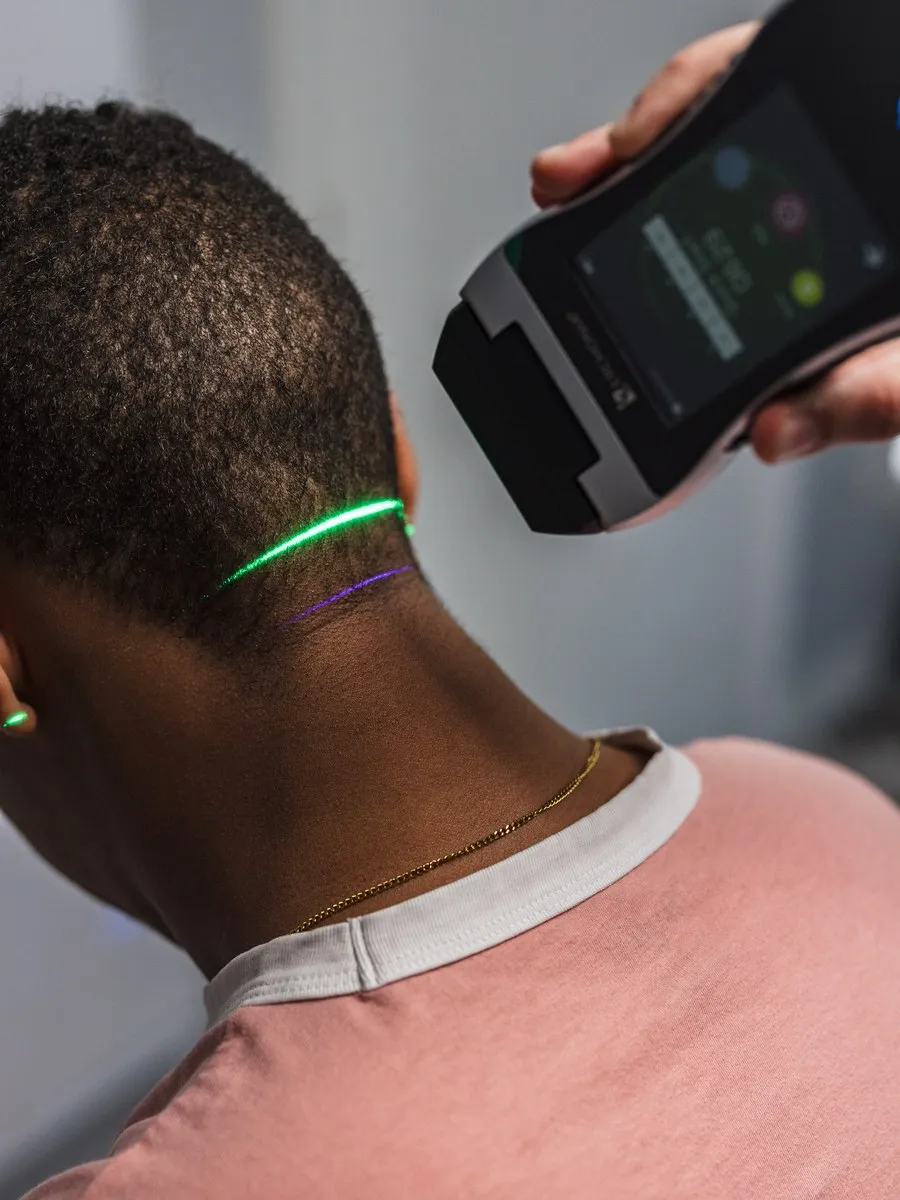
Same-visit combined protocols
Sessions are short, so laser therapy layers into an existing appointment: needle-based treatment per your assessment, followed by targeted laser application to the region of complaint. Two mechanisms, one visit, one time cost.
03
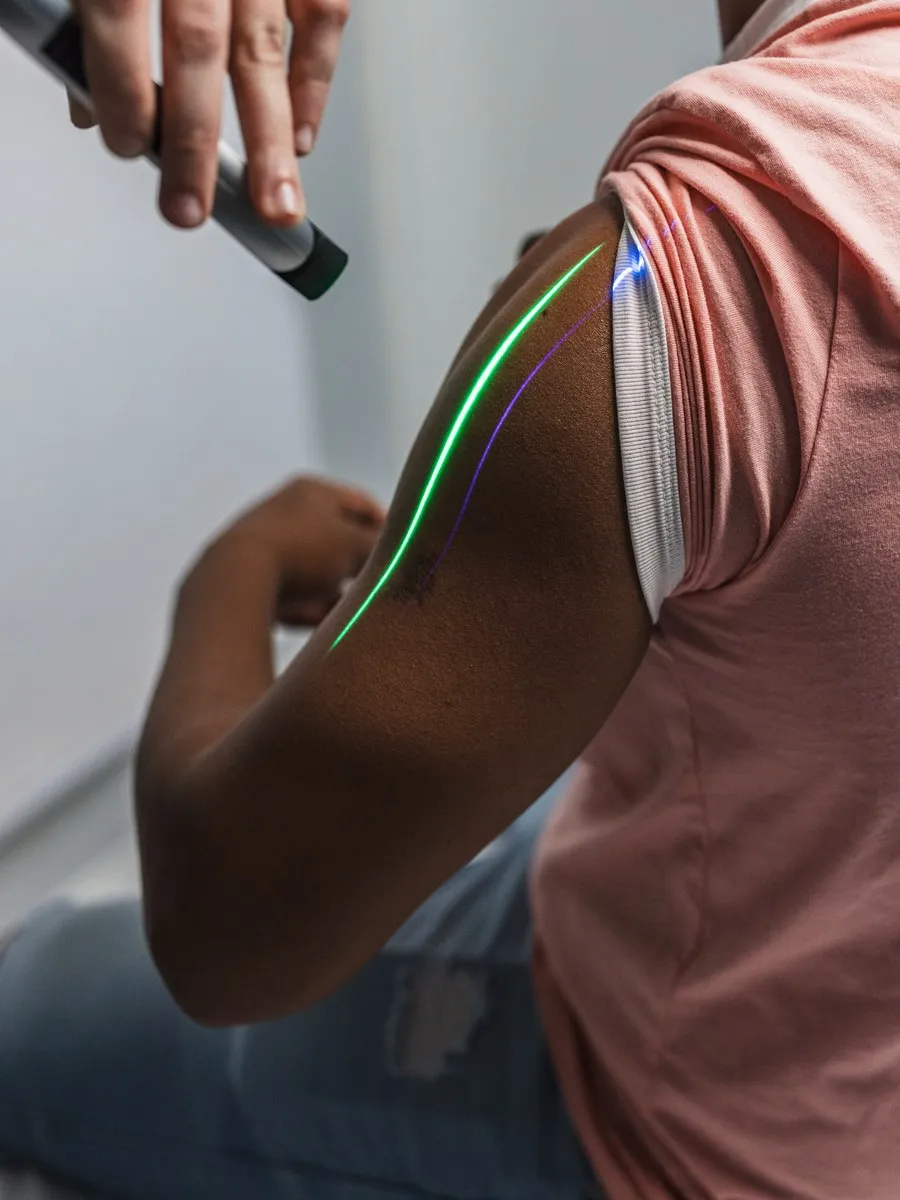
Structured series for musculoskeletal complaints
Erchonia’s pain clearances were established on multi-session protocols — mapping naturally onto how acupuncturists already work: a defined series, scheduled expectations, measurable check-ins.
Clinic · Patients · P&L
The practice case

Clinical fit
Non-thermal, non-invasive, mechanism-aligned with your philosophy. No pharmaceuticals, no tissue damage, no conflict with concurrent needle-based care.

Patient fit
Reaches the needle-hesitant patient you currently lose, deepens the plan for the patient you already treat, and shows the research-oriented patient that your practice bridges tradition and science with evidence.

Business fit
No consumables. After acquisition, the marginal cost of a session is treatment-room time.
Short, same-visit sessions. Adds billable service depth without adding appointment slots.
A durable differentiator. “Acupuncture practice with an RCT-validated laser platform” is a position competitors can’t copy with a $2,000 import device — and referring physicians know the difference.
Systems
Choosing a system
Matched to your practice, not sold off a shelf.

GVL
520 nm green + 405 nm violet · handheld
The most energetic pairing in the line — the first green-violet combination laser, FDA cleared in 2023. Line-generated beams for point-precise application.
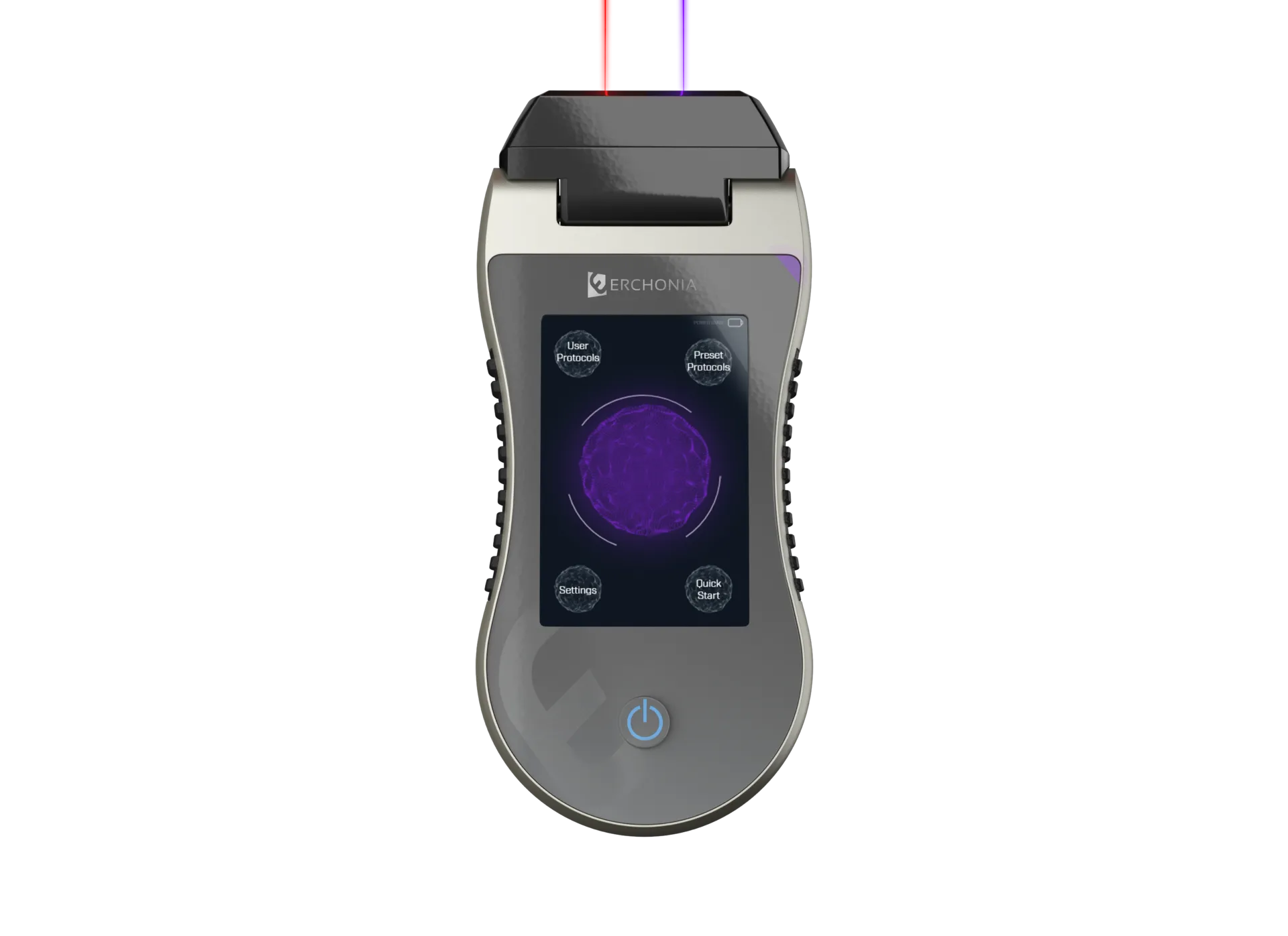
EVRL
405 nm violet + 635 nm red · handheld
Red and violet in one handheld instrument — the workhorse for treatment-room protocols, with violet’s anti-microbial properties alongside its therapeutic role.
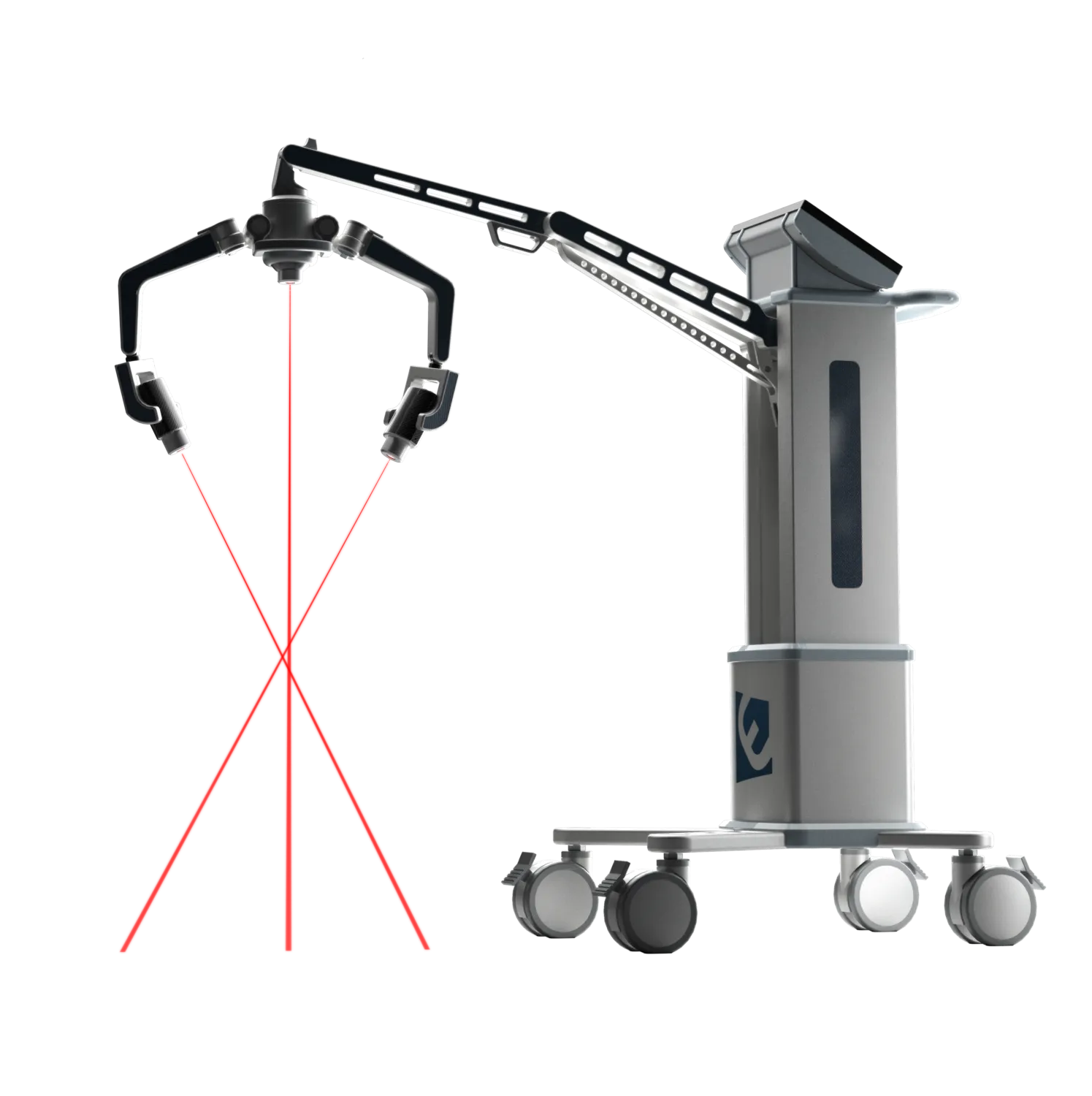
FX 635
Stand-mounted · hands-free scanner
The stand-mounted platform for hands-free protocols — runs while you work the next room, cleared for chronic low back pain and plantar fasciitis among its indications.
Erchonia’s range spans handheld dual-diode instruments through stand-mounted systems for hands-free protocols. The right fit depends on your patient mix, treatment-room setup and how central laser therapy will be to your service design. Our team works with integrative practices daily.
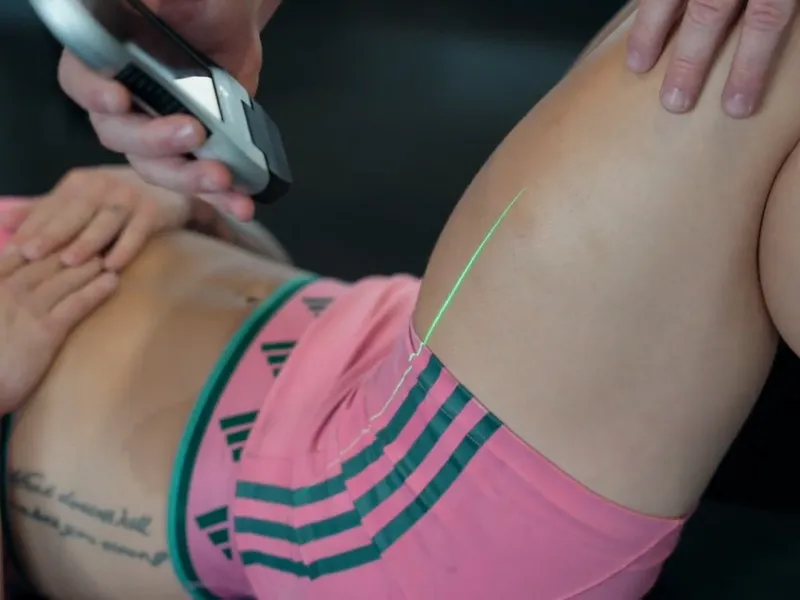
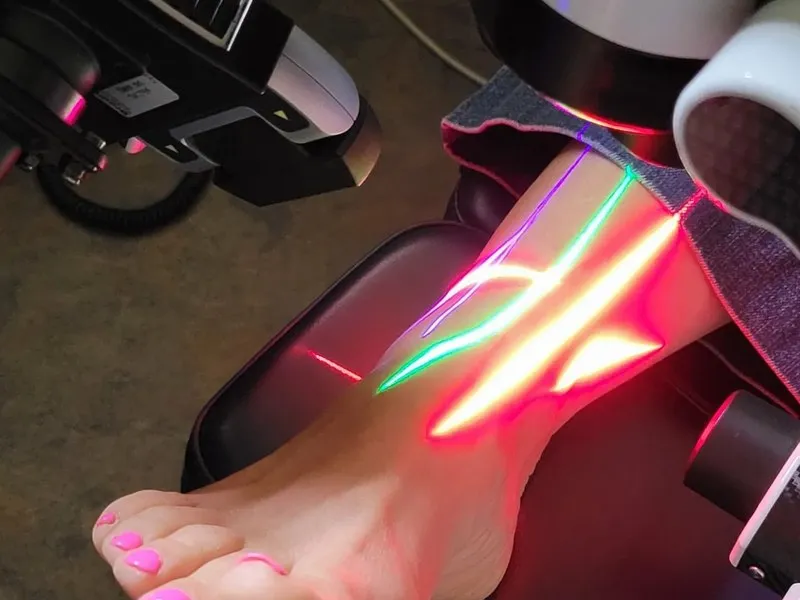
Point by point
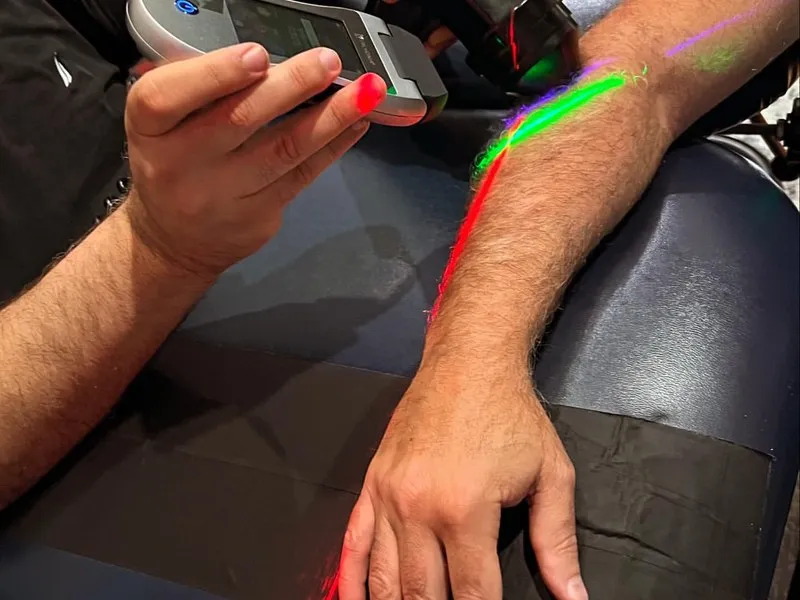
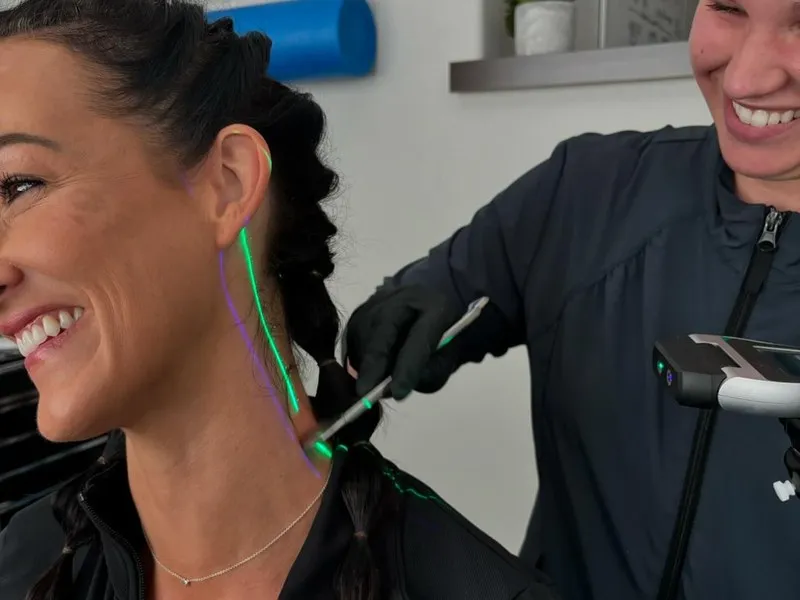
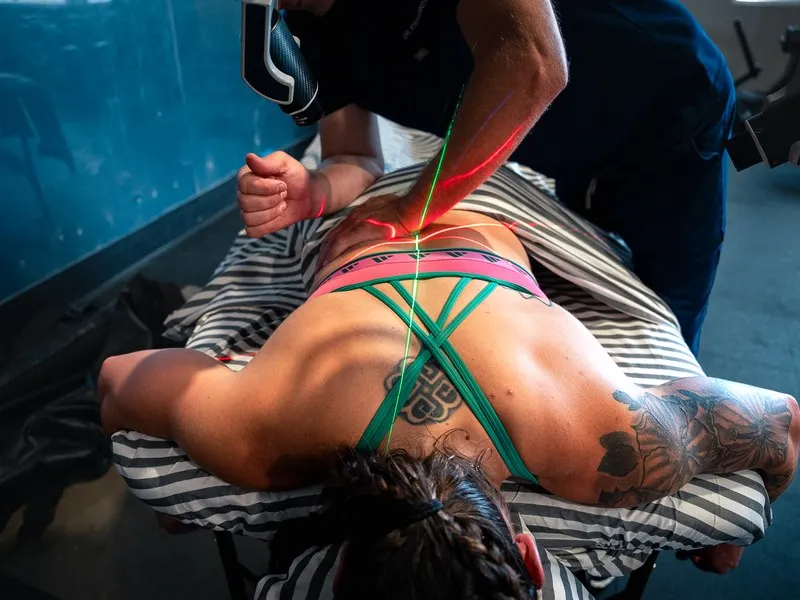
Where the beam goes.
Line-generated beams, placed with the anatomical precision a point-based discipline expects.
Questions
Questions acupuncturists ask
Next step
Let’s map a system to your treatment room.
Solo practice, integrative clinic or multi-provider — tell us how it runs.
Every system ships with onboarding and protocol support from our clinical team.