|

Dental
Dental
A different kind of dental laser.
Surgical lasers work during the procedure. This one works on everything around it.
In dentistry, “laser” means a cutting instrument. Erchonia builds the other kind: a non-thermal, low-level laser whose effect is photochemical. It doesn’t cut, ablate or heat — it’s for the sore jaw before the procedure, the post-operative days after it, and the neck and shoulder pain your patients carry into every appointment.
- Non-thermal
- FDA-cleared for pain
- Drug-free
- Silent
- Adjunctive — replaces nothing
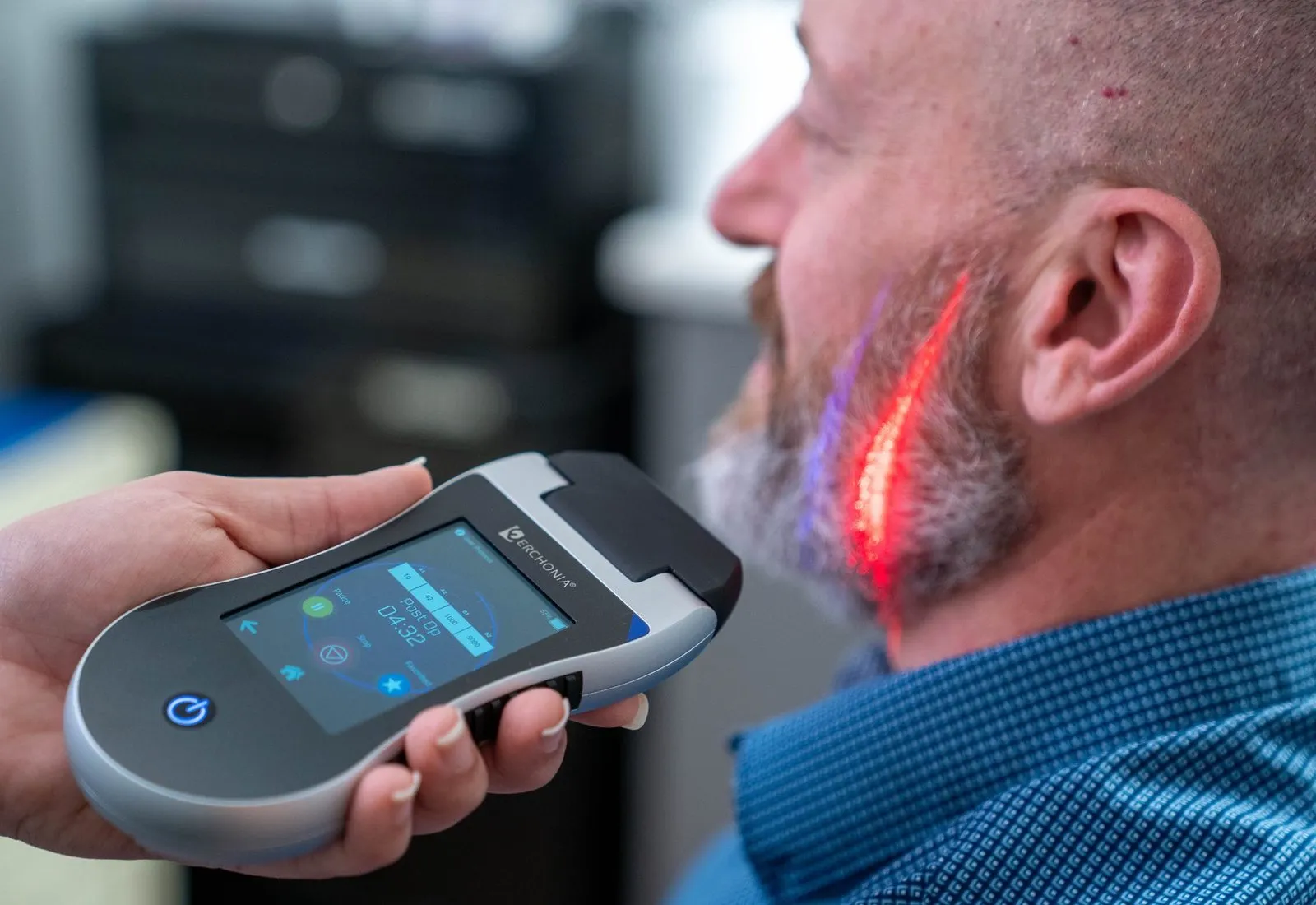
Cleared for painNociceptive musculoskeletal pain and postoperative pain — clearances established through double-blind, randomized, placebo-controlled trials.
1st
FDA market clearance ever granted for low-level laser therapy
25
FDA clearances since 1996, on double-blind, randomized, placebo-controlled trials
42,000+
Erchonia devices in the field
30
years in the human market — patients who could say whether it worked
Two lasers, two jobs
One removes tissue. One talks to it.
Same word. Different instrument.
The dental lasers you’ve seen marketed are surgical instruments: concentrated thermal energy doing precise, destructive work, exactly as designed. Low-level laser therapy is a different tool with a different job — and keeping the two straight is the fastest way to understand where it fits in your practice.
| Surgical / ablative dental laser | Erchonia low-level laser | |
|---|---|---|
| The job | Cut, remove, reshape tissue during a procedure | Adjunctive pain relief around procedures and musculoskeletal complaints |
| The mechanism | Thermal — tissue is vaporized or coagulated by design | Photochemical — nothing is cut, heated or numbed |
| When it’s used | During treatment | Before, after and between visits — wherever pain is the complaint |
| What the patient feels | Anesthetized procedure site | Typically nothing — no heat, no vibration; the patient simply rests |
| What it replaces | The handpiece, in cleared procedures | Nothing — it layers onto the dentistry you already do |
Surgical lasers are about what happens in the chair. This one is about how the patient feels walking in and walking out.
The mechanism
How photobiomodulation works
Photochemistry, not heat. Nothing is cut, heated or numbed.
01
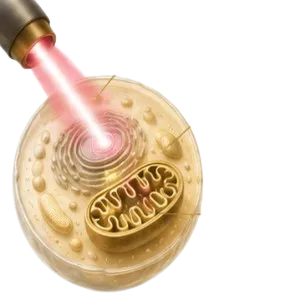
Absorption
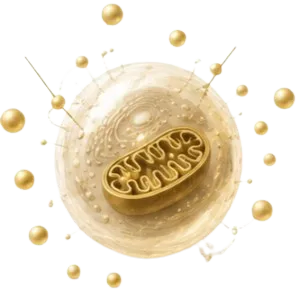
Photons are absorbed by chromophores in the cell — chiefly cytochrome c oxidase in the mitochondria. Absorption is wavelength-specific, which is why Erchonia engineers discrete violet (405 nm), green (520 nm) and red (635 nm) diodes rather than broad-spectrum output.
02
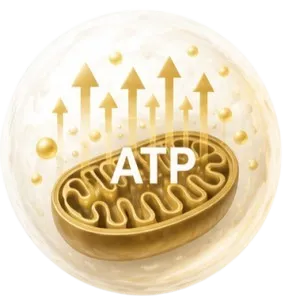
Energy production
Absorption drives ATP synthesis upward — more energy available for normal cellular function.
03
Signaling
The same event releases nitric oxide and a brief pulse of reactive oxygen species — signaling molecules that shift gene expression in the treated cell.
04
A response beyond the beam
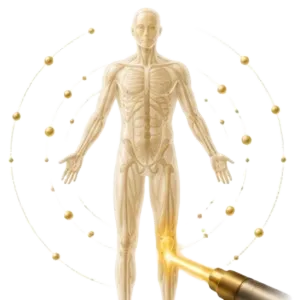
These signaling mediators move beyond the treatment site, so measured effects aren’t confined to the spot under the laser — a systemic response to a local, precisely placed stimulus.
Precision through wavelength, dose and placement — a logic dentistry already respects in every instrument it picks up.
Why Erchonia
Why Erchonia, specifically
High-energy, not high-powered. And an evidence bar nobody set.
Power counts photons. Energy is what each photon can do.
Wattage counts photon quantity — and in tissue, excess quantity becomes heat. A photon’s energy is set by wavelength: Erchonia’s 405 nm violet carries ~3.06 eV, over one and a half times the ~1.95 eV of 635 nm red. Photochemistry at milliwatt power, with the biphasic dose principle respected by design. A profession that titrates everything it delivers will recognize the logic: the right dose of the right energy, not the most of either.

Three decades of patients who could tell you.
Erchonia earned the first FDA market clearance ever granted for low-level laser therapy and has built 25 clearances since 1996 on double-blind, randomized, placebo-controlled trials. No one requires that standard from an adjunctive therapy device. We hold ourselves to it anyway, so the device in your operatory carries evidence you can show a researching patient or a skeptical colleague — not a brochure claim.
Built for the operatory.
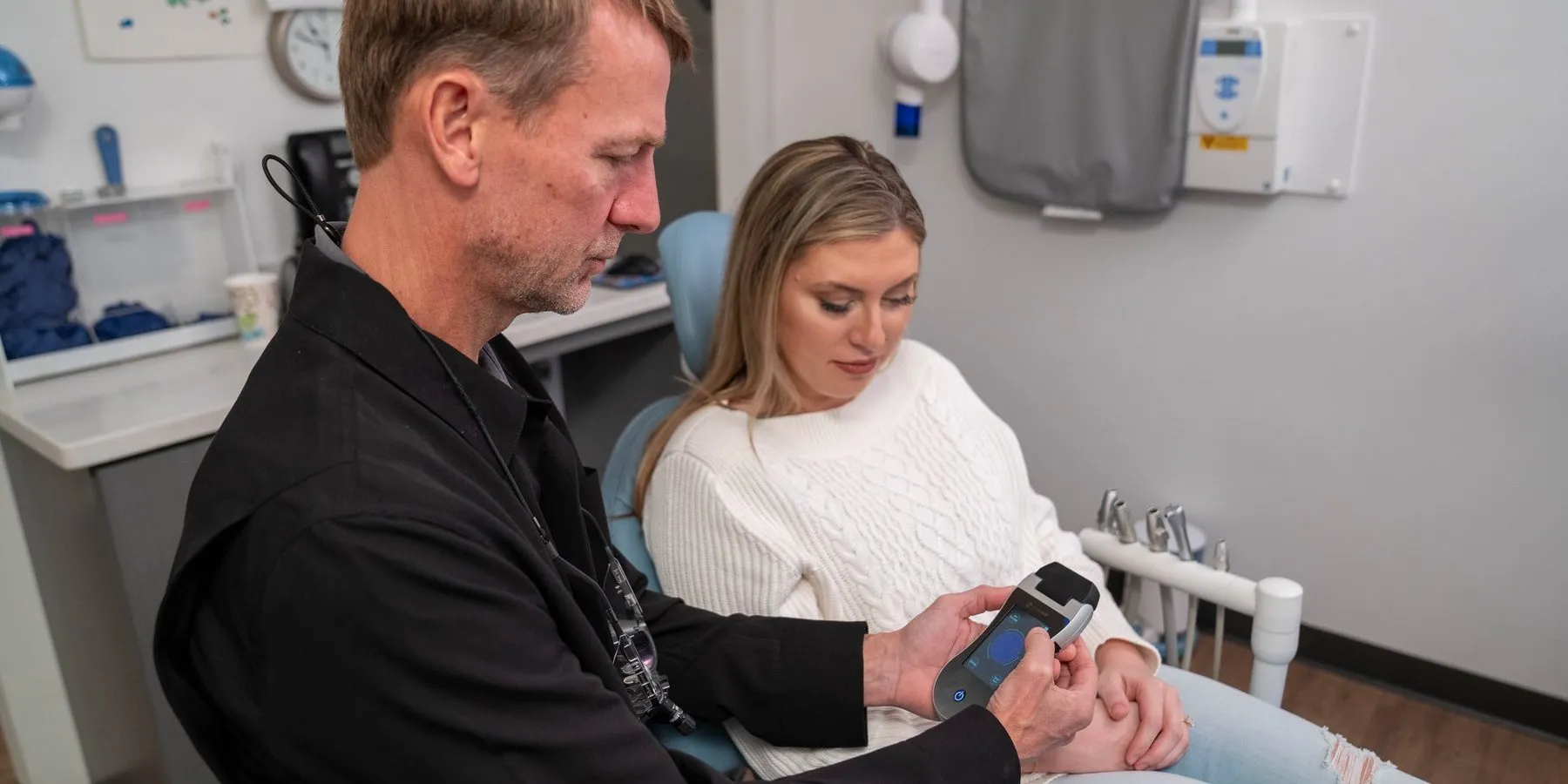
Silent, non-thermal, and short enough to fit inside the appointments you already run. Handheld systems move between operatories; stand-mounted scanner platforms run hands-free while your team works. Nothing about the workflow asks your schedule to bend.
Before, after and between
Not for the procedure. For the days around it.
Where it fits
Where it fits in a dental practice
Three programs, mapped to what the technology is actually cleared for.
01
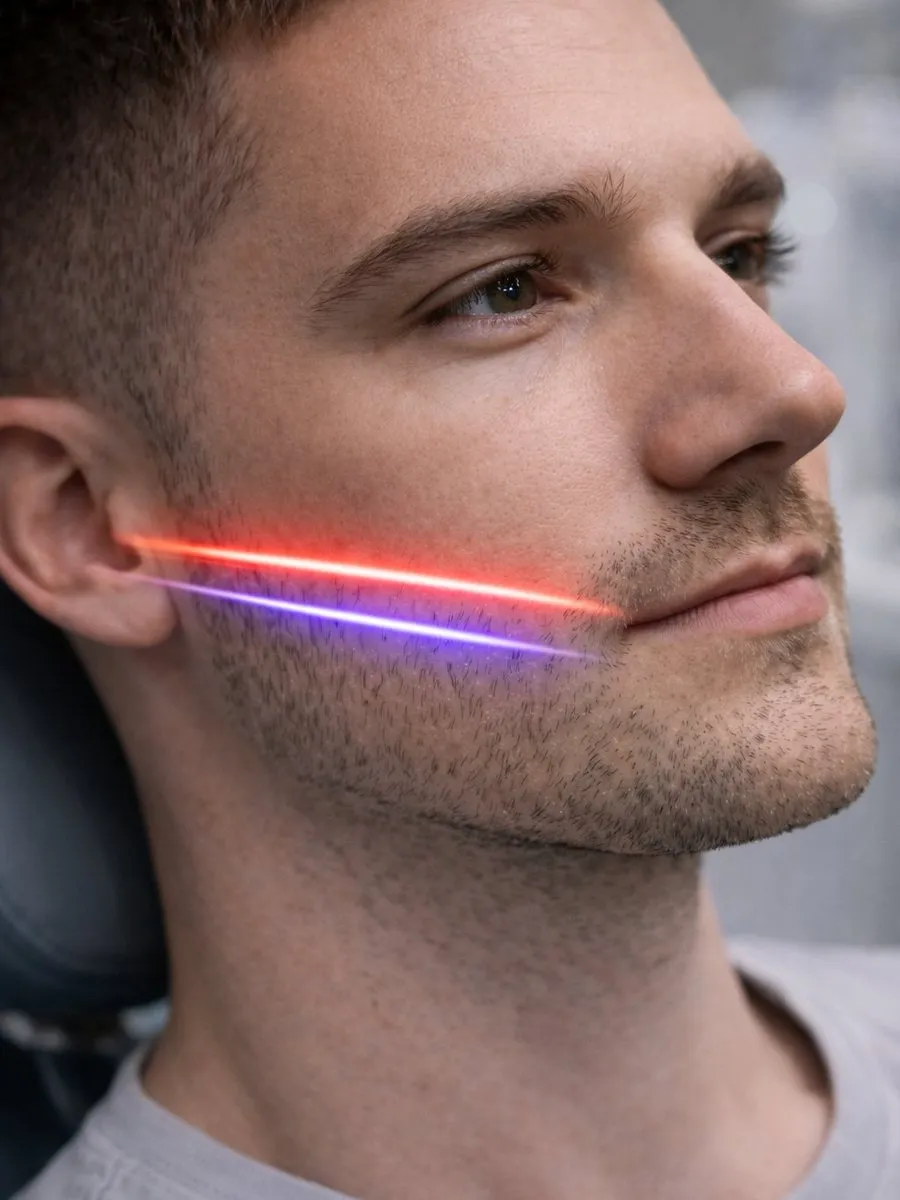
Musculoskeletal orofacial pain care
Erchonia lasers are cleared for nociceptive musculoskeletal pain. In a dental practice that is what walks in as TMD-associated musculoskeletal pain, orofacial and myofascial pain, and musculoskeletal pain of the jaw and neck. These patients are already in your chairs, and a practitioner-directed laser protocol gives you a structured, drug-free way to address the complaint instead of only observing it.
02
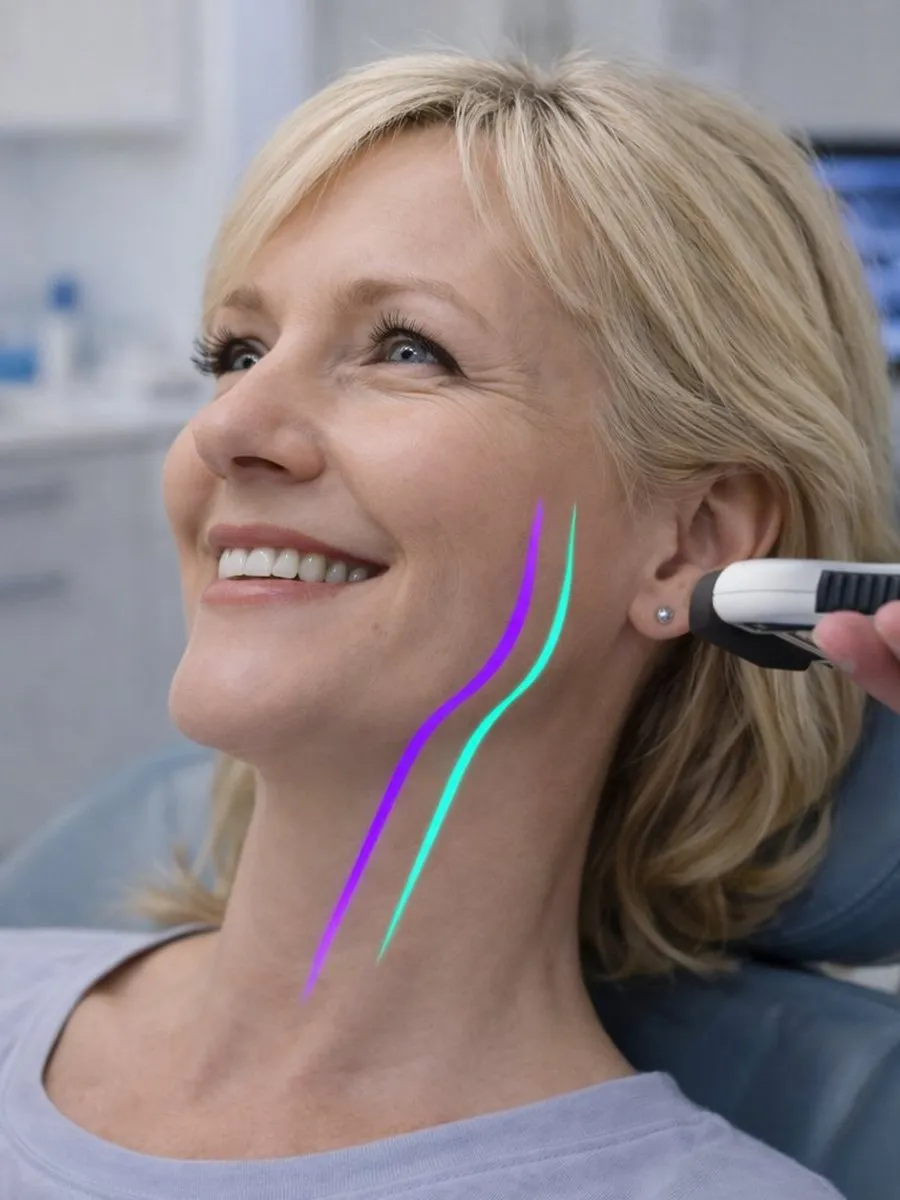
Post-operative pain protocols
Erchonia lasers are also cleared for postoperative pain: the pain that follows extractions, wisdom-tooth removal, implant placement, endodontic treatment and periodontal surgery. Built into your standing post-op protocol, a short laser session becomes part of how your practice manages the days patients remember most — the days that drive reviews, referrals and return visits.
03
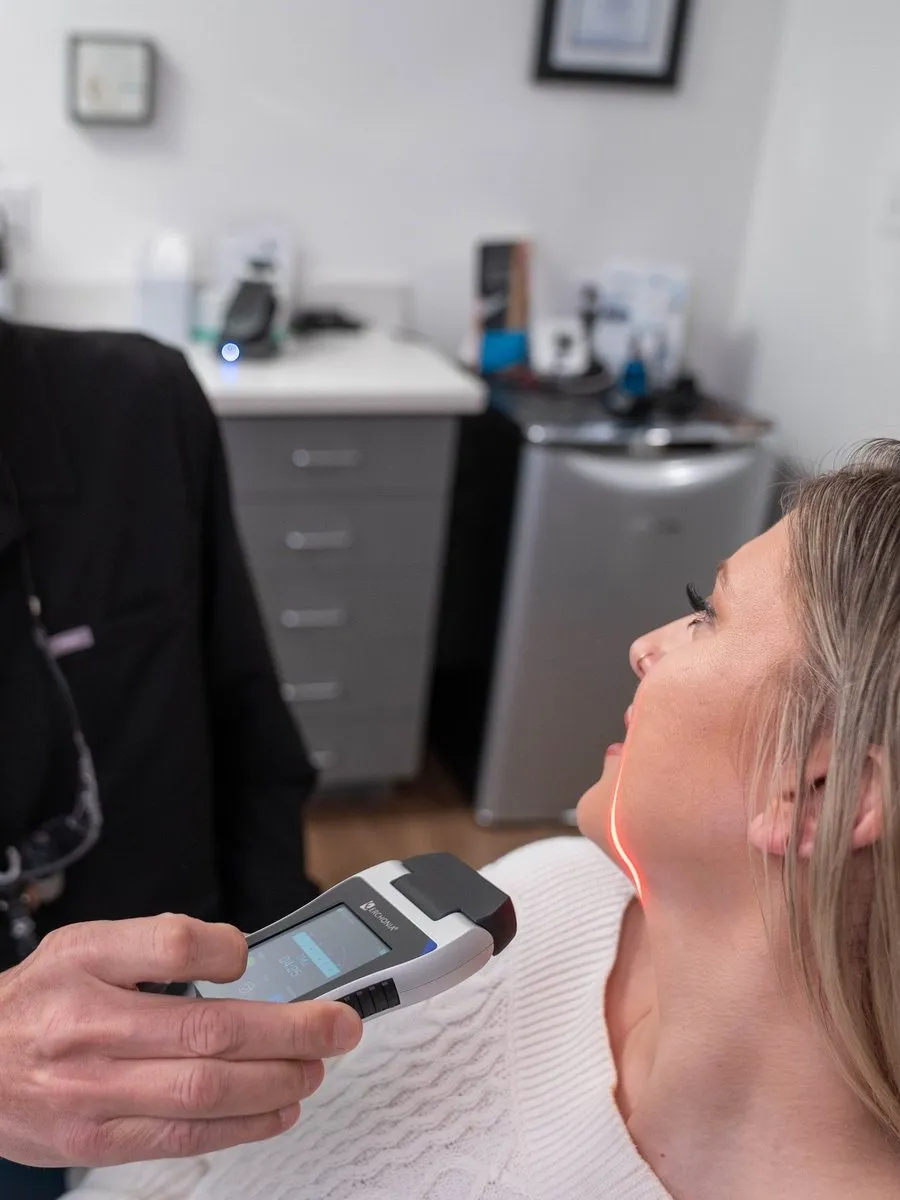
The whole patient in the chair
Nociceptive musculoskeletal pain isn’t jaw-specific. Forward-head neck pain and shoulder pain fall within the same cleared category — nociceptive musculoskeletal pain. Your patients bring those complaints to every appointment; addressing them positions the practice around the whole person in the chair, not just the arch under the light.
The aesthetic add-on
Teeth whitening. Jaw tightening.
The patient who books whitening is already thinking about how their face looks.
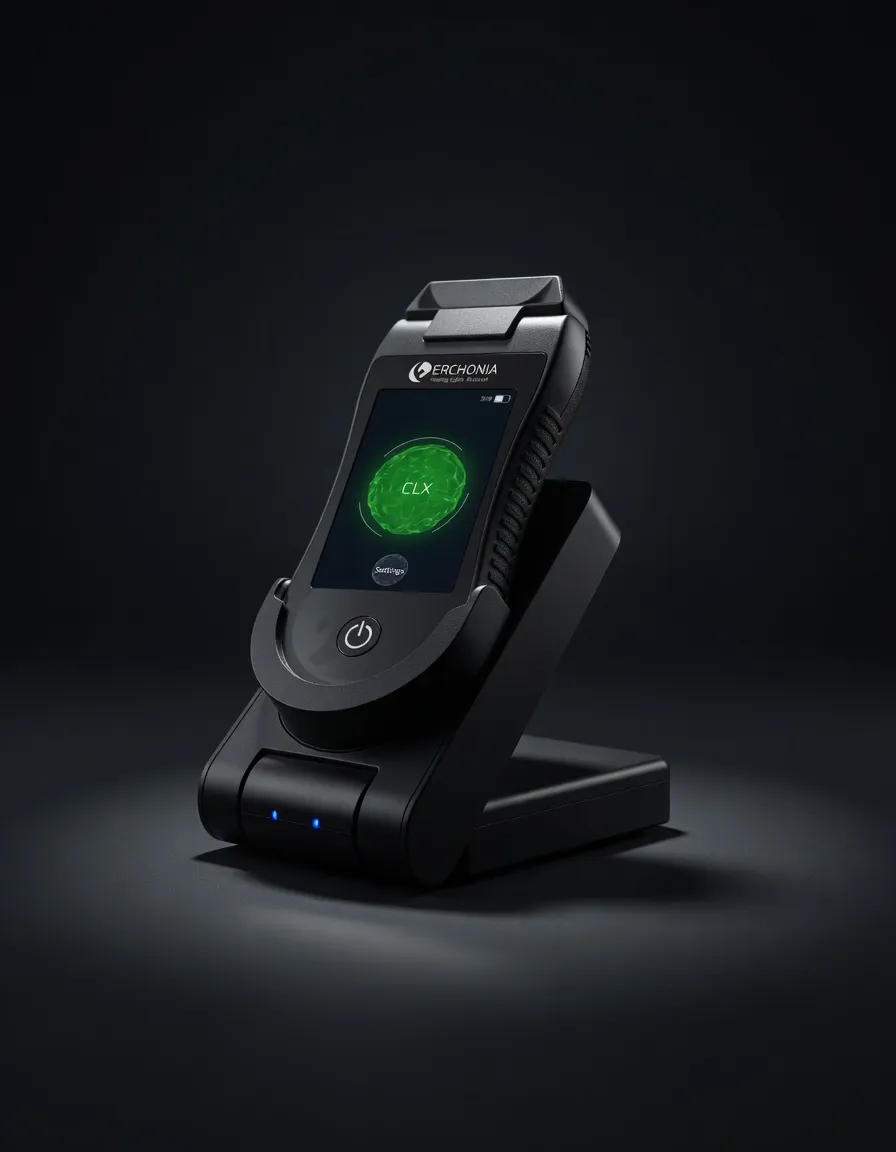
CLX pairs 520 nm green and 405 nm violet in one handheld, non-thermal laser — FDA-cleared for non-invasive aesthetic treatment to improve the appearance of the submental (under-chin) area. Fifteen-minute sessions, no contact, no needles, no downtime: a second cash-pay service for the practice that already sells a smile.
- 15-minute sessions
- Touchless
- Non-thermal
- Zero downtime
- No consumables
CLX is FDA-cleared for non-invasive aesthetic treatment to improve the appearance of the submental (under-chin) area.
Chairs · Patients · P&L
The practice case
Clinical fit
Non-thermal, non-invasive and drug-free — an adjunctive modality that layers onto your existing procedures and protocols without changing how you perform any of them, with cleared indications that map directly onto the complaints a dental practice sees daily.
Patient fit
Dentistry serves the most anxiety-loaded patient population in healthcare. A silent, sensation-free modality addressed to their pain — before procedures, after them and between them — is a comfort story patients can feel and repeat. For the drug-averse patient managing post-op discomfort, it’s an option they’ll thank you for offering.
Business fit
Session economics that round to zero. No applicator cards, no consumable kits — the margin stays in the practice.
Delegable, schedule-friendly delivery. Short, protocol-driven sessions under your supervision model — service depth without doctor time.
A differentiator patients can feel. “The practice that treats how I feel, not just my teeth” is a review a surgical laser can’t earn.
Systems
Choosing a system
Matched to your operatories and your patient mix.
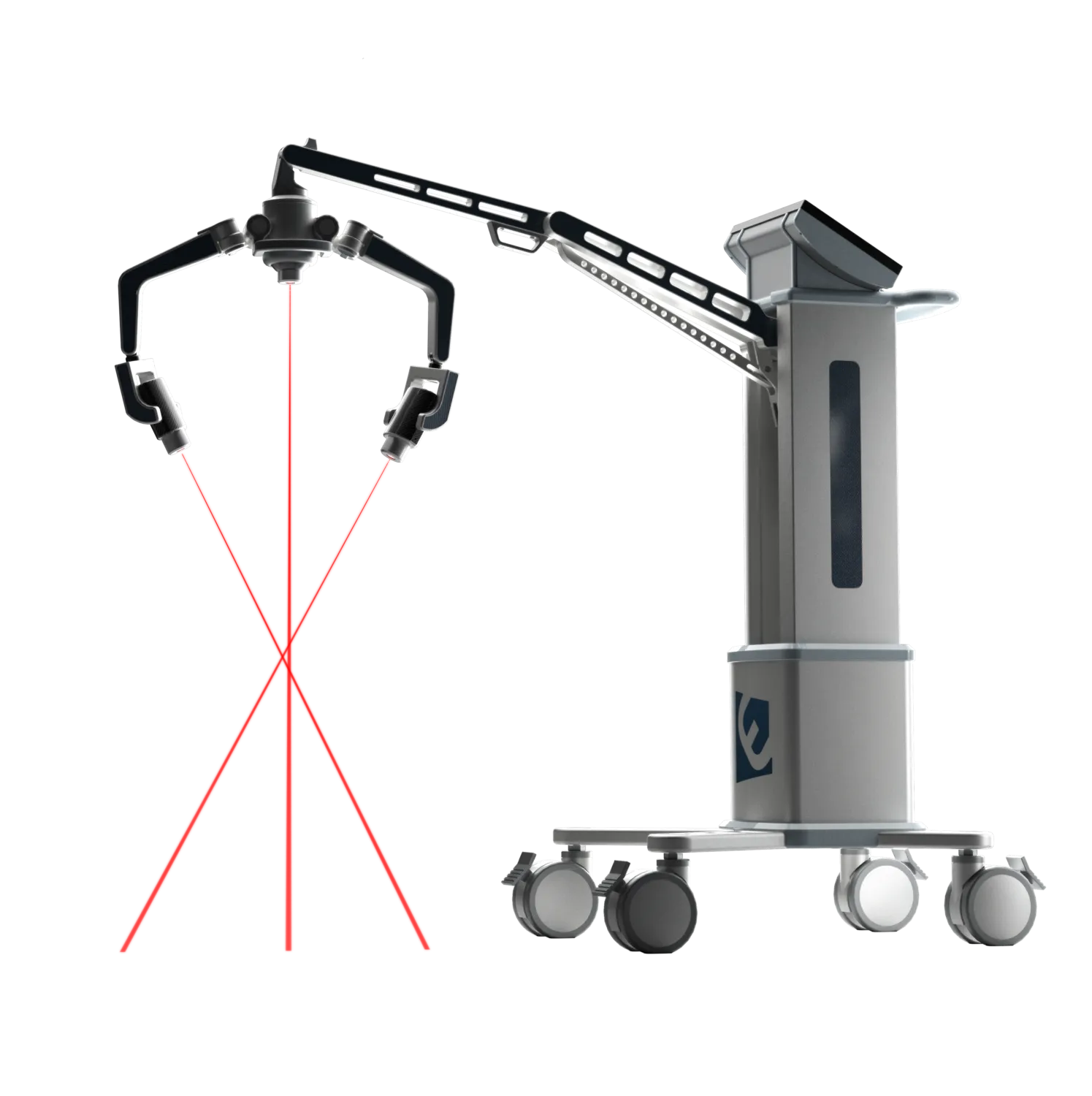
FX 635
Stand-mounted · hands-free scanner
The stand-mounted platform for hands-free protocols — runs while your team works, in a treatment room or a spare operatory.
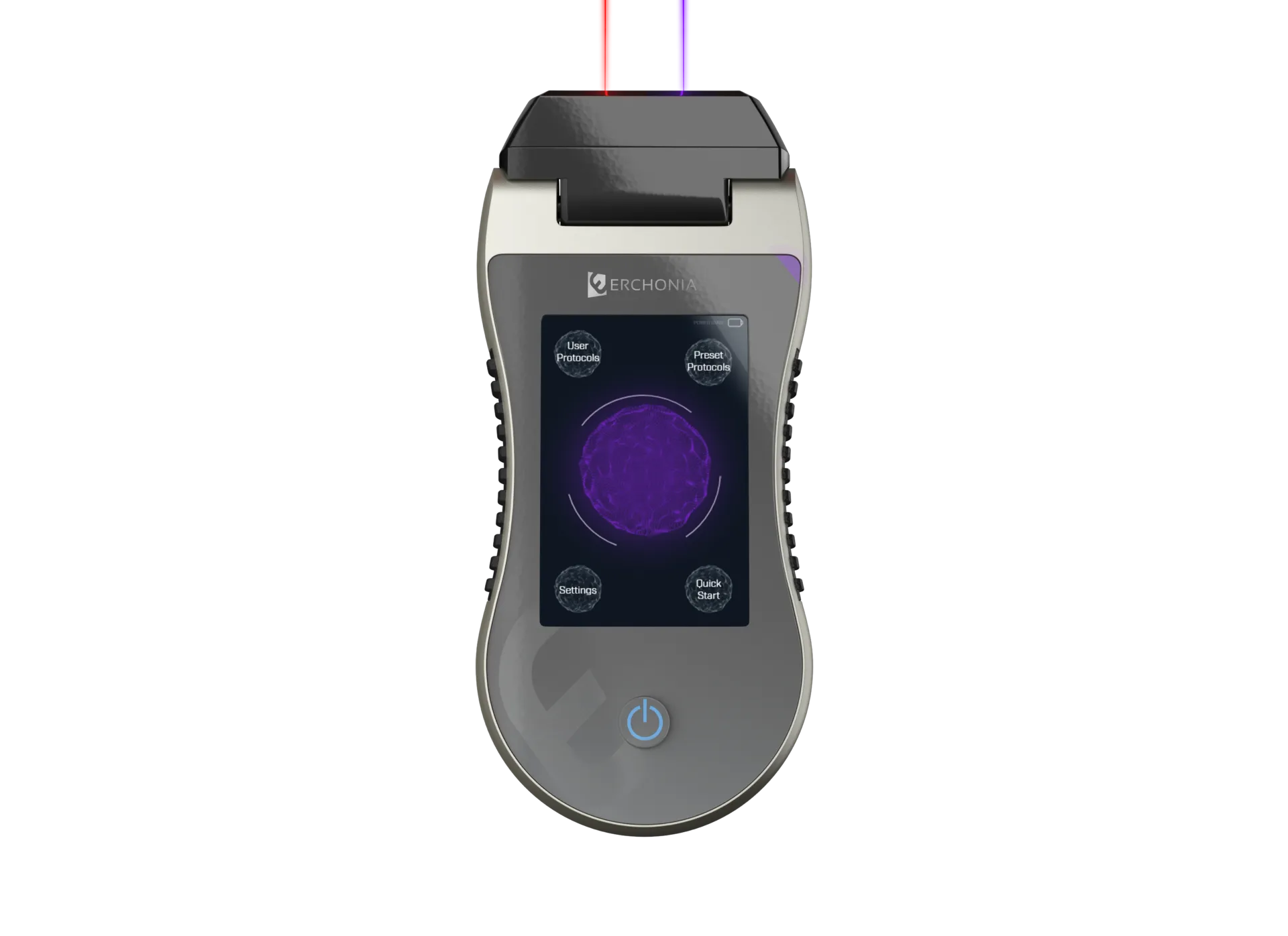
EVRL
405 nm violet + 635 nm red · handheld
The handheld that moves between operatories: red and violet in one instrument, with violet’s anti-microbial properties alongside its therapeutic role.
CLX
520 nm green + 405 nm violet · submental
The aesthetic add-on: a non-invasive laser FDA-cleared to improve the appearance of the submental (under-chin) area. Touchless, non-thermal, no downtime.
The right fit depends on your practice profile — general, oral surgery, TMD-focused or multi-op group — and how central adjunctive pain care will be to your service design. Our team can map a system to how your practice actually runs.
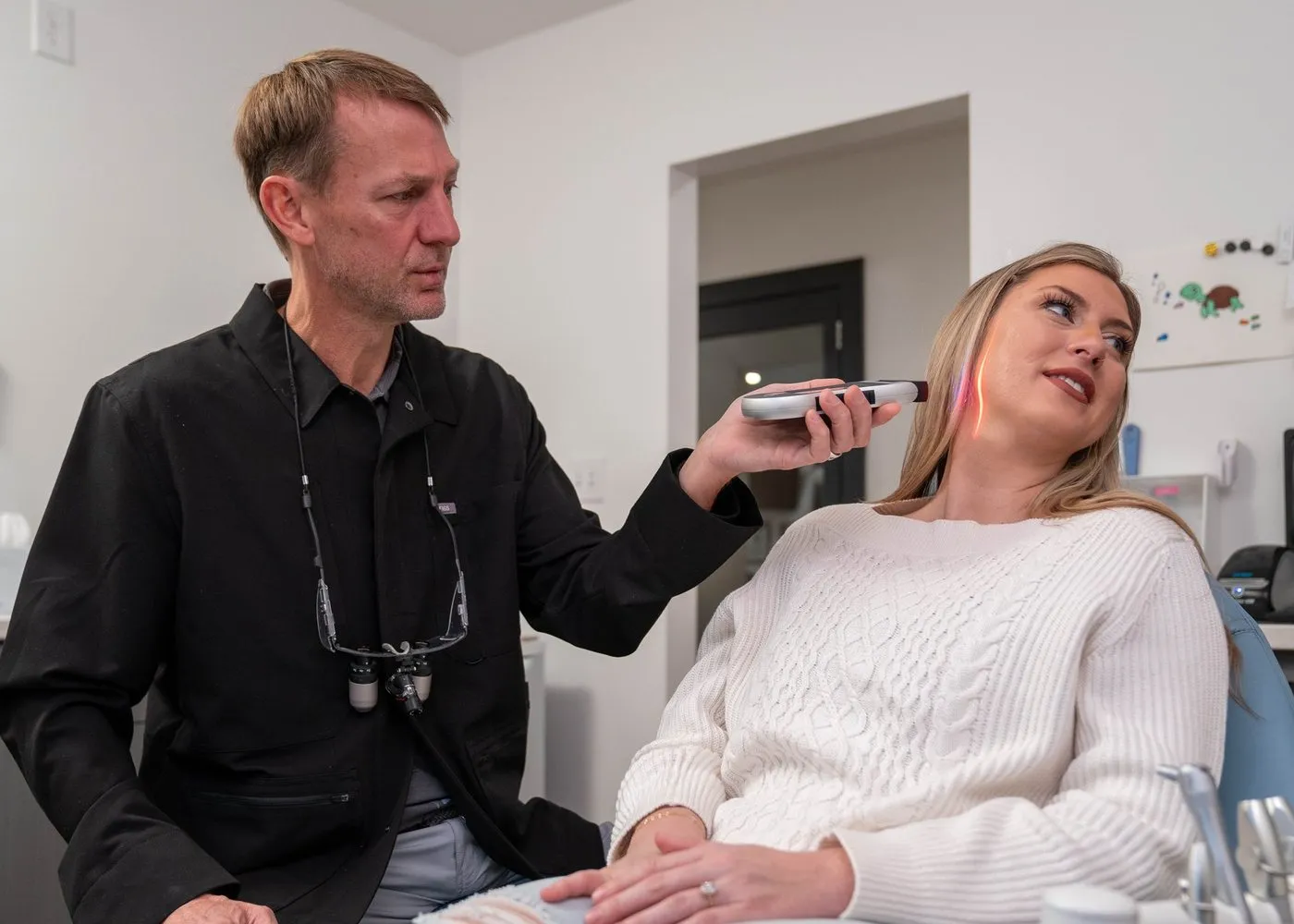
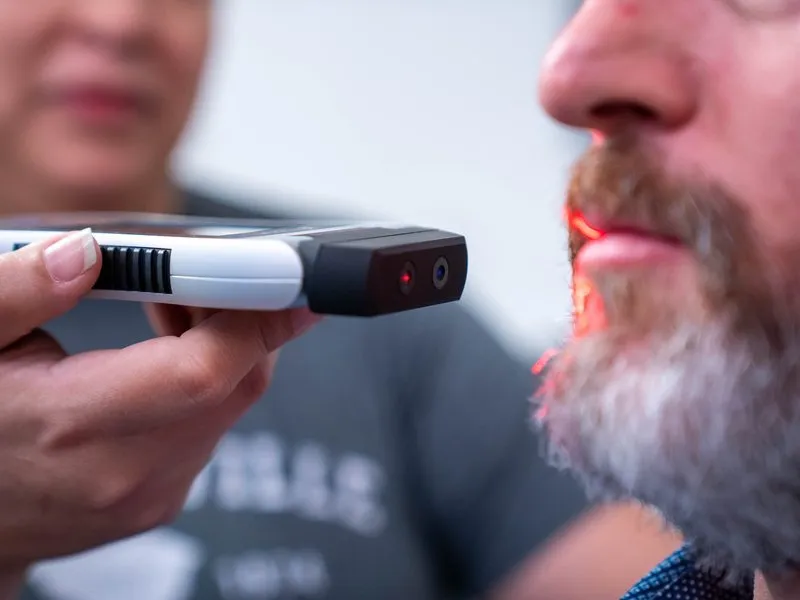
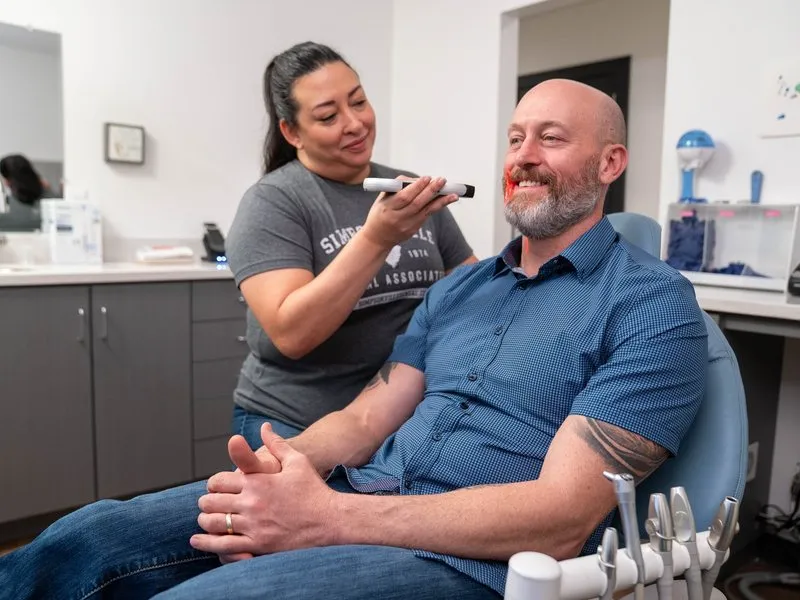
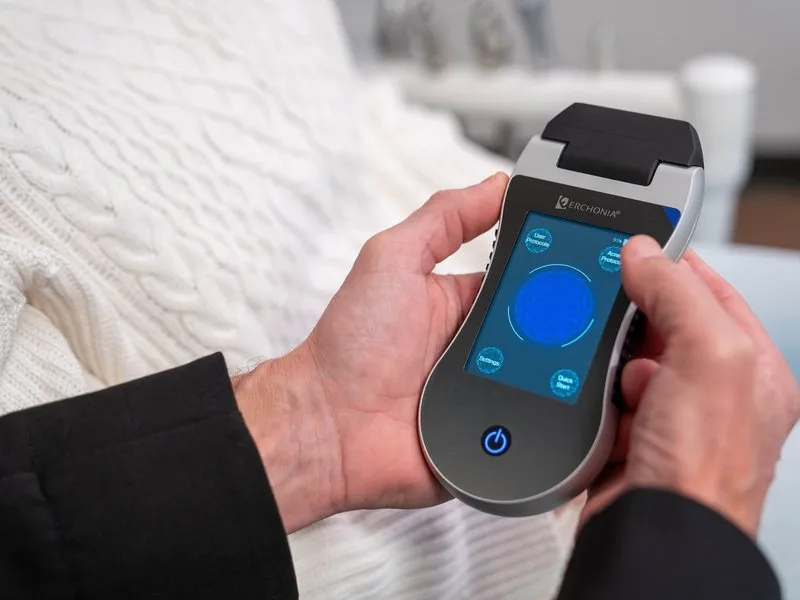
In the operatory
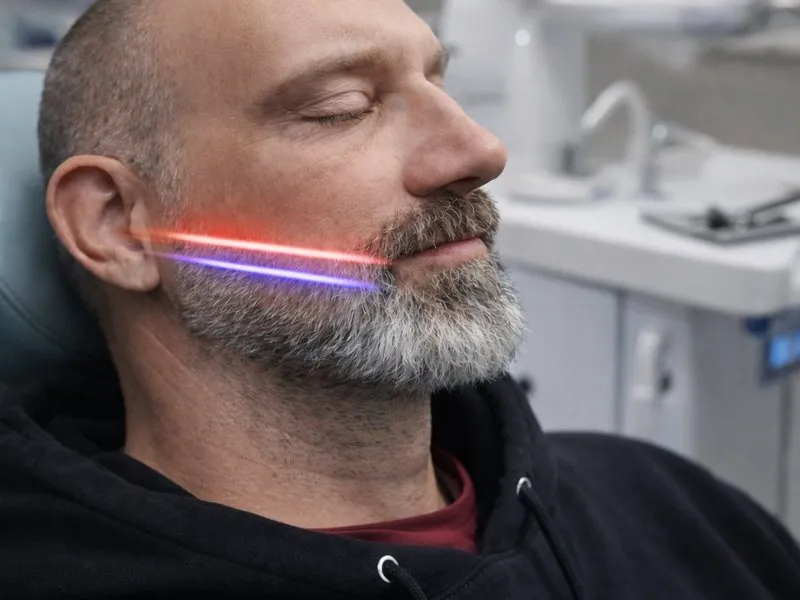
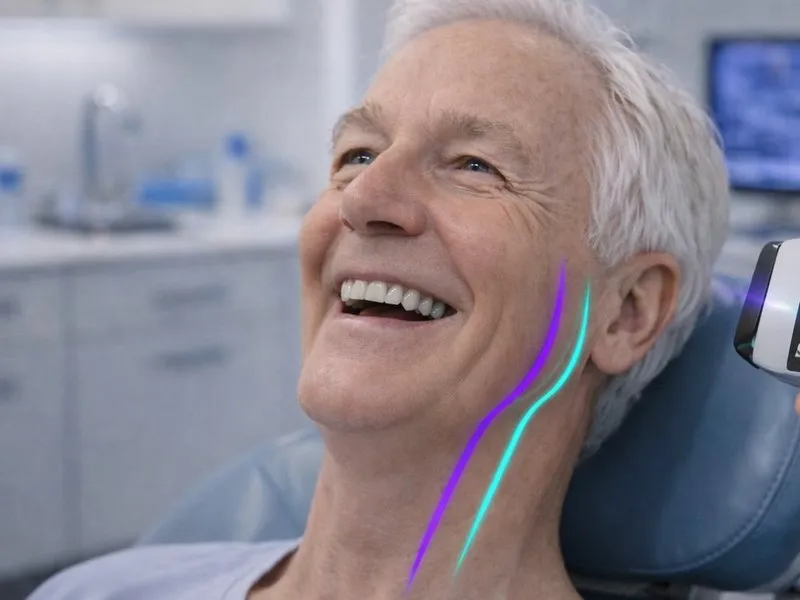
The patient in the chair, not just the arch.
Silent, sensation-free and short enough to fit the appointment you already booked.
Questions
Questions dental practices ask
Next step
Let’s map a system to your operatories.
General, oral surgery, TMD-focused or multi-op — tell us how your practice runs.
Every system ships with onboarding and protocol support from our clinical team.