|

Low Level Laser Therapy
Science & education · Low-level laser therapy
The power and penetration myth.
Low-level laser therapy — LLLT, 3LT®, cold laser — has more than twenty years of published, peer-reviewed, double-blind controlled studies behind it. Most of what is said about power and depth does not.
Understanding how the body responds to low-level laser is an advancing paradigm in wellness, and it is surrounded by claims that do not survive the literature: that more watts mean more penetration, that more joules mean more effect, that a higher hazard class means a better treatment. This page walks through what the research actually shows — and what to ask any manufacturer before you buy.
- First FDA clearance, 2002
- Product code NHN
- Non-heating
- Milliwatts, not watts
- Level 1 evidence
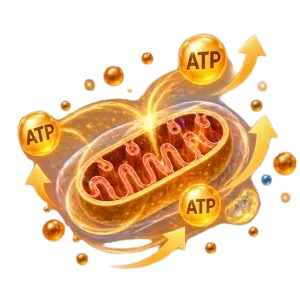
Weak stimuli excite. Strong stimuli retard.The Arndt–Schulz law, and the reason a 5 mW diode can outperform a 100 mW one in a controlled trial.
2002
first U.S. FDA clearance for 3LT® — and a new device classification, NHN: non-heating modalities for adjunctive pain therapy
64%
decrease in pain versus placebo after a single four-minute treatment with a 5 mW, 635 nm laser — the first clearance
2–4 J/cm²
the biostimulation window through overlying skin (0.5–1 J/cm² on an open wound) — Tunér & Hode, 2002
6 cm
depth at which an 8 mW, 635 nm laser was shown by MRI to emulsify fat — Neira et al., 2001
Four myths
What the brochures say — and what the research says.
Each of these is repeated by manufacturers. None is supported by a controlled trial of the device making the claim.
01
“More power means more penetration.”
No 510(k) market clearance has been granted to any high-powered laser on the basis of its own clinical trial. The devices marketed as “high-powered low-level lasers” (product code ILY) are topical heating devices; once the collecting lens is removed so the beam won’t burn skin, it ceases to be a focused laser at all.
02
“More joules means more effect.”
Energy density is the most misunderstood variable in the field, and the response to it is non-linear. Hawkins and Abrahamse (2006) showed that as little as 10 J can damage the DNA of the cell and decrease cell viability — with a 3 mW divergent beam, which is less harmful than a narrow parallel one.
03
“A higher class is a better laser.”
Laser classification describes “the possible risk for eye injuries and has nothing to do with the efficiency in treatment” (Tunér & Hode). Class 4 is a hazard rating, not a clinical one.
04
“Any wavelength will do.”
Rochkind et al. (1988) found strong effects on nerve action potential at 540 nm and 632.8 nm — and none at 904 nm or at continuous-wave 660, 830, 880 and 950 nm. Wavelength selects the chromophore; the chromophore decides the response.
Dose
Less energy, more efficient results.
Two FDA clearances, side by side — the first for neck and shoulder pain, the second for carpal tunnel.
| First clearance — neck & shoulder | Second clearance — carpal tunnel | |
|---|---|---|
| Device | 5 mW, 635 nm red diode | 100 mW, 830 nm infrared |
| Protocol | One four-minute treatment | Three times a week for five weeks, fifteen minutes each |
| Result vs. placebo | 64% decrease in pain across all patients treated; increased muscle strength and range of motion | 6.6% difference in pain between real and placebo groups |
| Energy delivered | About 1.2 J in total | About 1,350 J in total — roughly a thousand times more |
The Arndt–Schulz law: weak stimuli excite biologic activity and strong stimuli retard it. Shiroto (1989) put it plainly — an increase in irradiation dose may decrease biostimulatory effects.
The same pattern holds in the bench work. Carrinho et al. (2006) compared 685 nm and 830 nm lasers at 3 and 10 J/cm² on tenotomized mouse tendons: the best repair came at 685 nm and 3 J/cm²; the worst consequences for healing came at 830 nm and 10 J/cm². Biostimulation, on the clinical research, sits at 0.5–1 J/cm² on an open wound and 2–4 J/cm² through overlying skin. High-powered devices must have the collecting lens removed to avoid burning the skin and must be scanned by hand to spread the heat; at 980 nm the penetration capacity is lower, not higher. In laser therapy, anything over one watt is excessive.
Depth of penetration
Six centimeters, on MRI.
The claim that red light stops at ten millimeters does not survive the imaging.
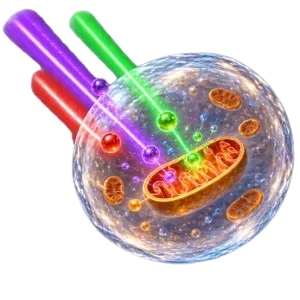
In 2001 Rodrigo Neira, M.D., published abdominal MRI imaging in the American Journal of Cosmetic Surgery showing that an 8 mW, 635 nm laser held six to eight inches from the skin could emulsify deep fat — at six centimeters — and break up the appearance of scar tissue. It is the study behind Erchonia’s fat-loss platforms, and it is the direct answer to the brochure line that red light at 640 nm penetrates “less than 10 mm.” The mechanism is photochemical, not thermal: the photon is absorbed, the cell responds, and the response propagates. Penetration is a property of wavelength and coherence, not of wattage.
Before you buy
Questions to ask any manufacturer.
Self-proclaimed experts form opinions without conducting independent research. Insist on the research for the device you are being sold.
01
Where is your trial?
Ask for the double-blind, placebo-controlled study of this device, for this indication. If they have no research, or hand you research done by others and claim they can do the same, look elsewhere.
02
Was it cleared on its own data?
A “substantial equivalence” filing compares features and components to a previously cleared device. It is not a clinical trial, and it does not tell you the device works.
03
Who carries the liability?
Verify the manufacturer’s liability insurance. A practitioner who cannot produce cellular or clinical research for a device may be told he can no longer use it.
About the author
Steven Shanks

Steven Shanks has worked with 3LT® since 1996 and was responsible for the regulatory work on the first FDA 510(k) clearance for low-level laser therapy (product code NHN) in 2002. He has since achieved three additional clearances, submitted a fourth, and is at work on five clinical trials in collaboration with universities and private practitioners.
Sources
References
- Oschman JL. The Biological Basis of Low Level Laser Light Therapy (3LT®). Nature’s Own Research Association. 2006.
- Center for Devices and Radiological Health, U.S. Food and Drug Administration. Radiation-Emitting Product Code: NHN. Viewed 4 September 2007.
- Tunér J, Hode L. Confounders and magicians. Viewed 4 September 2007.
- Center for Devices and Radiological Health, U.S. Food and Drug Administration. Radiation-Emitting Product Code: ILY. Viewed 4 September 2007.
- Hawkins DH, Abrahamse H. The role of laser fluence in cell viability, proliferation, and membrane integrity of wounded human skin fibroblasts following helium-neon laser irradiation. Lasers in Surgery and Medicine. 38:74–83; 2006.
- Karu T. Ten Lectures on Basic Science of Laser Phototherapy. Prima Books in Sweden AB. 277; 2007.
- Tunér J, Hode L. Laser Therapy: Clinical Practice and Scientific Background. Prima Books AB. 2002.
- Dorland’s Illustrated Medical Dictionary. Arndt–Schulz Law. WB Saunders, an Elsevier imprint. 2004. Viewed 4 September 2007.
- Kneebone WJ. Basic Principles of Low-Level Laser Therapy and Clinical Applications for Pain Relief. Dynamic Chiropractic. 25(18); August 27, 2007.
- Carrinho PM, et al. Comparative study using 685-nm and 830-nm lasers in the tissue repair of tenotomized tendons in the mouse. Photomedicine and Laser Surgery. 24(6):754–758; 2006.
- Pontinen PJ. Low Level Laser Therapy as a Medical Treatment Modality. Urpo Ltd. 2002.
- Neira R, et al. Low-level laser-assisted lipoplasty: appearance of fat demonstrated by MRI on abdominal tissue. American Journal of Cosmetic Surgery. 18(3):133–140; 2001.
- Jackson RF, et al. Low-level laser-assisted liposuction. American Journal of Cosmetic Surgery. 21(4):191–198; 2004.
Next step
Let’s talk about your clinic.
Find the right lasers for your clinic and your patients with a dedicated laser expert.