|

Pain Management Lasers
Pain-management lasers
Healing light. Refined.
FDA-cleared, non-thermal laser therapy for musculoskeletal pain — without heat, tissue damage or invasive procedures.
Erchonia pain lasers are low-level laser therapy systems engineered to address nociceptive musculoskeletal pain. Unlike high-powered surgical or thermal devices, they deliver precise wavelengths and dosimetry that interact with cellular processes — driving the cellular energy and signaling involved in pain relief. No downtime, no side effects, no tissue destruction; designed for reproducible, consistent clinical application.
- 635 nm red
- 405 nm violet
- 520 nm green
- Handheld or hands-free
- Non-thermal
- 25 FDA clearances
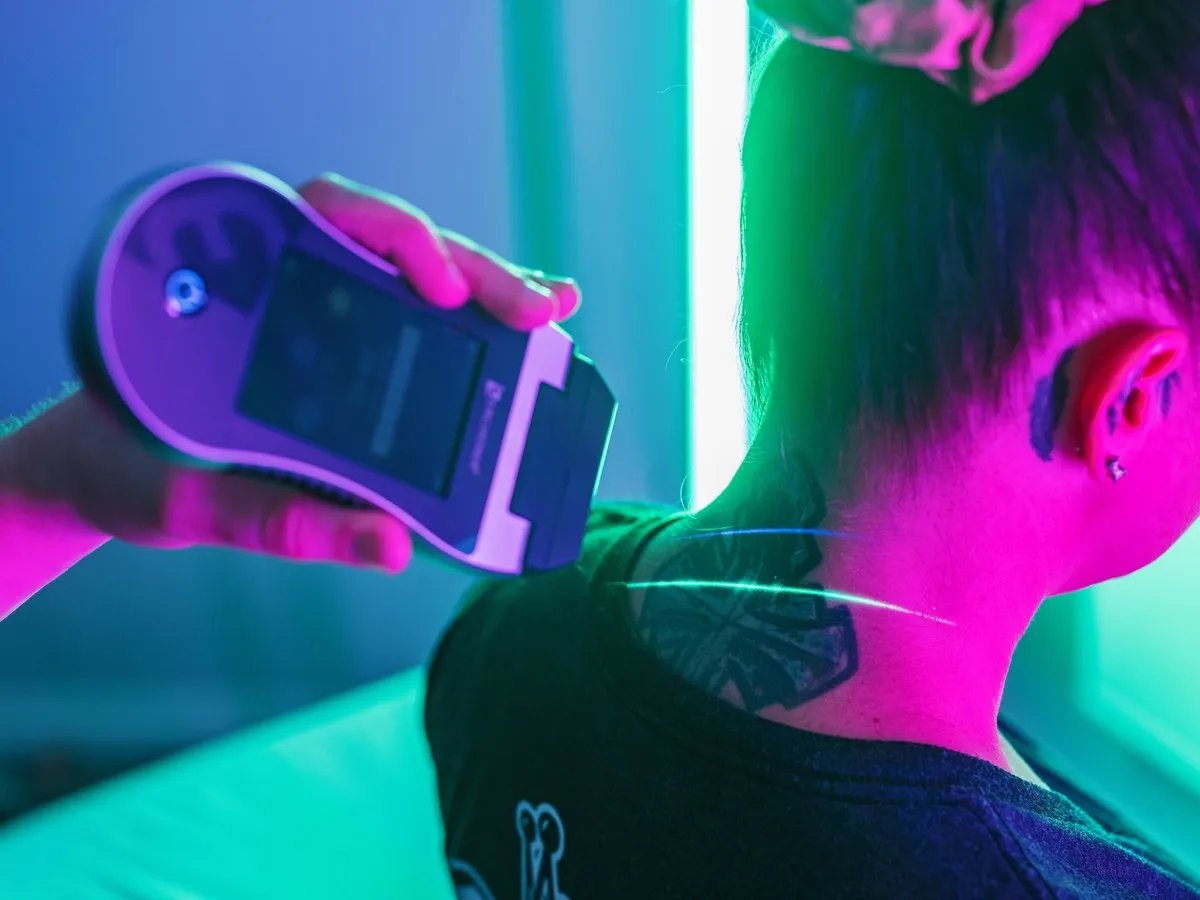
Where the clearances startedErchonia earned the first FDA market clearance ever granted for low-level laser therapy — and has built 25 since, on double-blind, randomized, placebo-controlled trials.
1st
FDA market clearance for low-level laser therapy — earned on 635 nm red
25
FDA clearances since 1996, on double-blind, randomized, placebo-controlled trials
3
wavelengths — red, violet and green — each chosen for the energy of its photon
0
downtime, side effects or tissue destruction
Different wavelength, different purpose
Power counts photons. Energy is what each photon can do.
Wattage measures photon quantity — and in tissue, excess quantity becomes heat. A photon’s energy is set by wavelength.
Erchonia builds high-energy lasers, not high-powered ones. Each diode is selected for the chromophore it targets: 635 nm red for cytochrome c oxidase and the pain clearances that built the company; 405 nm violet for the most energetic photon in the line, with anti-microbial properties and dermatological indications; 520 nm green for Complex III of the electron transport chain, a pathway red alone doesn’t reach. All of it at milliwatt power, where the biphasic dose principle is respected by design — photochemistry, not heat.
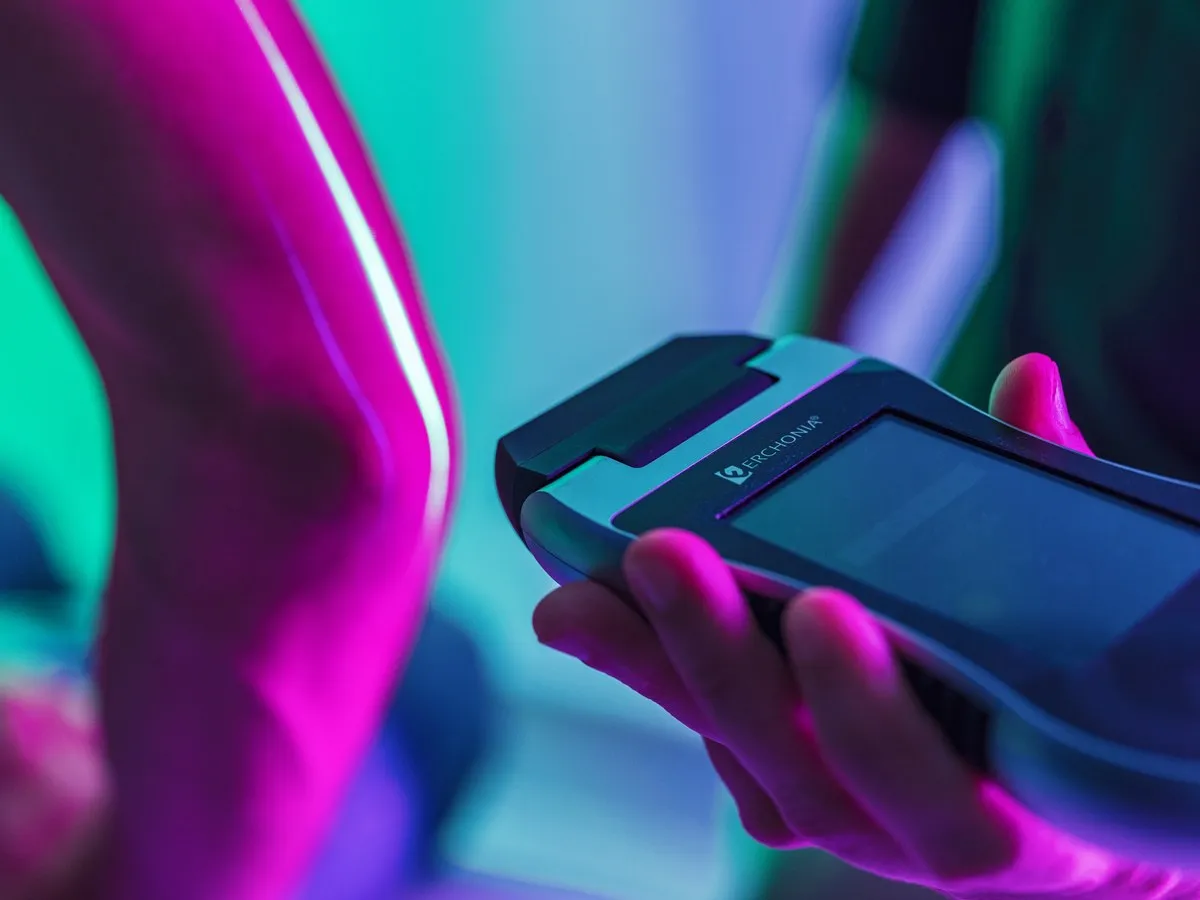
| Diode | Photon energy | What it targets | Where you find it |
|---|---|---|---|
| 635 nm red | ~1.95 eV | Cytochrome c oxidase (Complex IV) — ATP production; neck, shoulder, low back and postoperative pain | XLR8 · EVRL · FX 635 · FX 405 |
| 405 nm violet | ~3.06 eV | The most energetic photon in the line; ROS signaling; anti-microbial; moderate inflammatory acne | EVRL · GVL · FX 405 |
| 520 nm green | ~2.38 eV | Complex III of the electron transport chain — ROM and pain improvement demonstrated in a single session | GVL |
This is energy advancement — not power escalation.
The line
Four platforms, one philosophy.
Handheld for the segment in front of you, stand-mounted for the protocol that runs while you work.
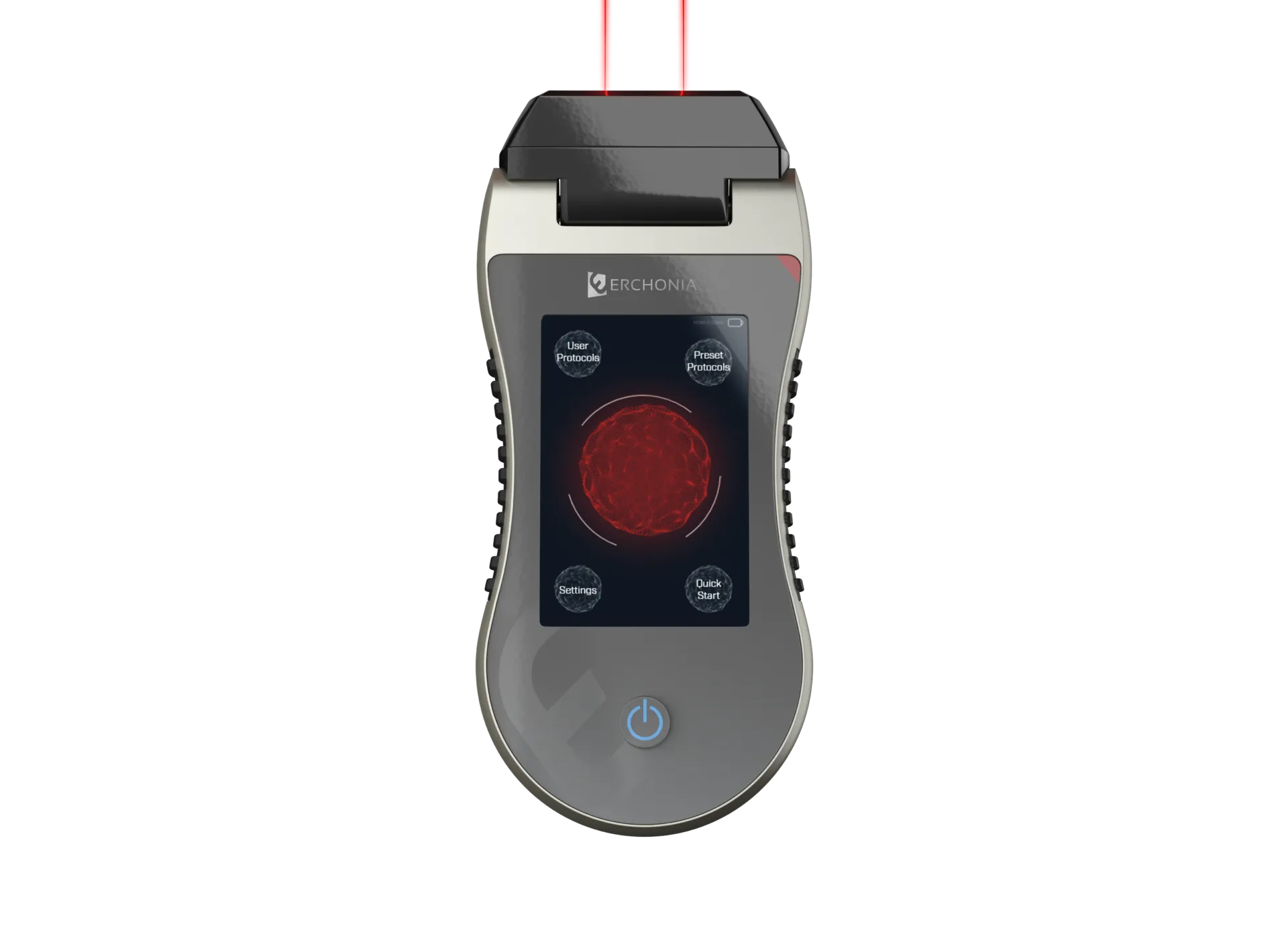
XLR8
Dual 635 nm red · handheld · entry level
The proven 635 nm foundation — the wavelength behind Erchonia’s first FDA clearance, in the simplest format the company makes.
Best for: foundational musculoskeletal care and cost-conscious clinical expansion.
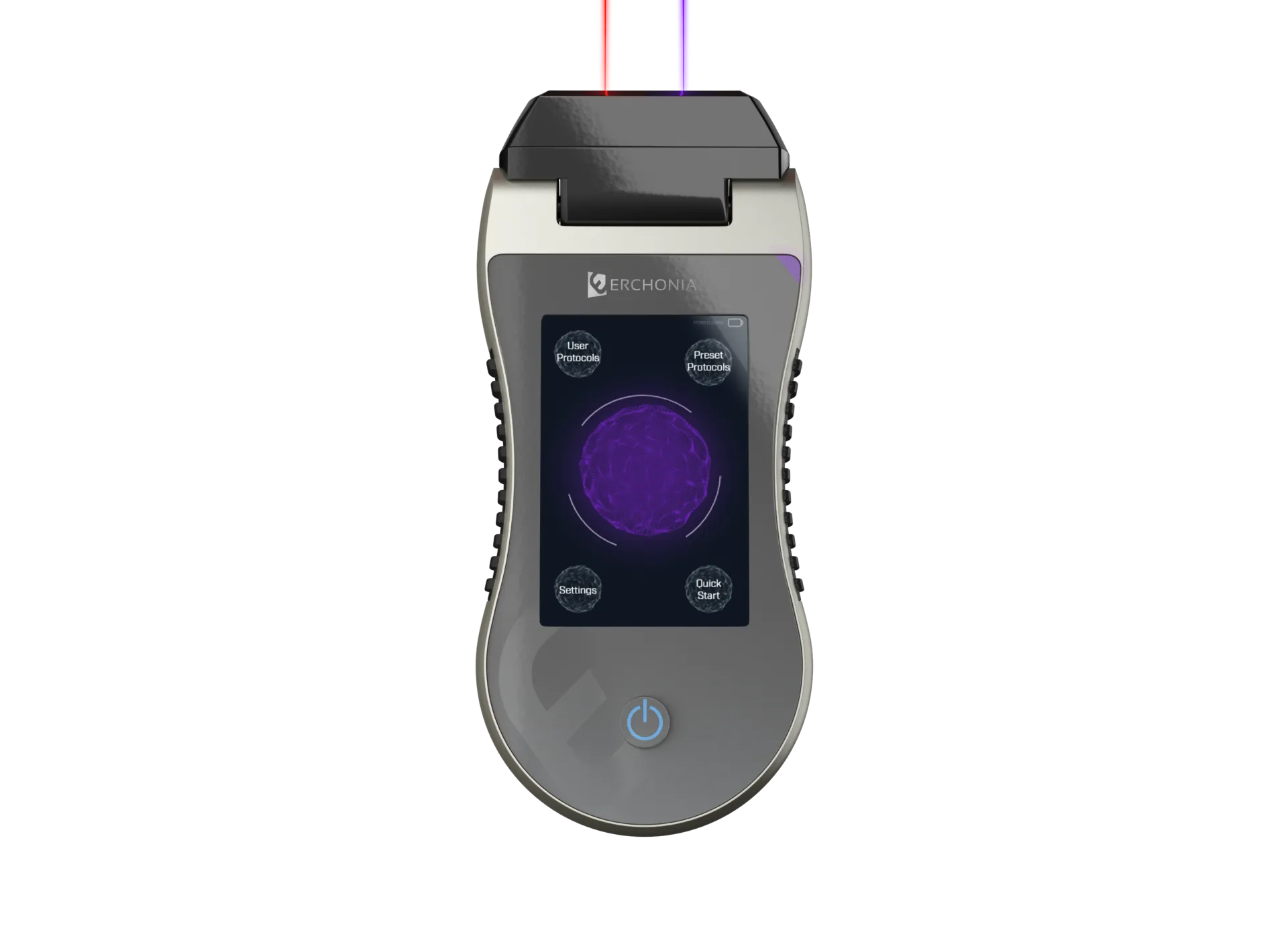
EVRL
405 nm violet + 635 nm red · handheld
Red and violet in one instrument — expanded versatility, with a dermatological indication alongside the pain protocols.
Best for: practices that want everyday pain protocols plus dual-wavelength versatility.

GVL
520 nm green + 405 nm violet · handheld
The first and only FDA-cleared green/violet laser — ROM and pain improvement demonstrated within a single session.
Best for: clinicians who want the most advanced wavelength platform, for everyday and performance-driven care.
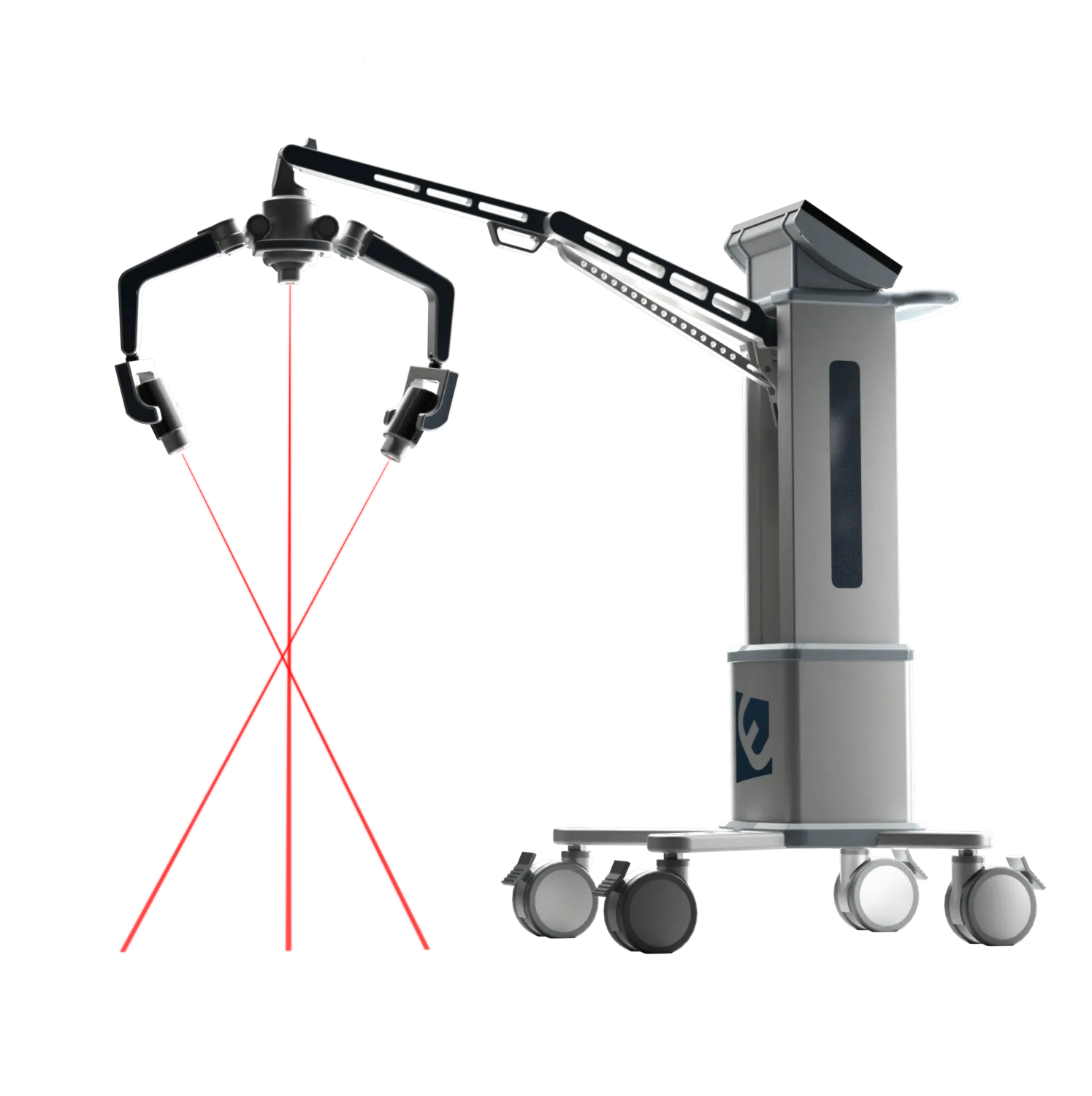
FX Series
Stand-mounted scanners · hands-free
The only low-level lasers FDA-cleared for chronic low back pain and plantar fasciitis. The FX 635 runs red; the FX 405 adds violet.
Best for: chiropractors and conservative-care providers who want scalable, cleared low back pain treatment.
Also in the line: the FX 405 red-and-violet scanner, the Base Station, and the stands and accessories that put a handheld on a hands-free protocol.
The mechanism
How our lasers stimulate the electron transport chain
Photochemistry, not heat. Nothing is burned, cut or numbed.
01
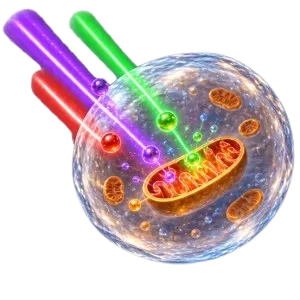
Absorption
Photons are absorbed by chromophores in the cell — chiefly cytochrome c oxidase in the mitochondria. Absorption is wavelength-specific, which is why Erchonia engineers discrete violet (405 nm), green (520 nm) and red (635 nm) diodes rather than broad-spectrum output.
02
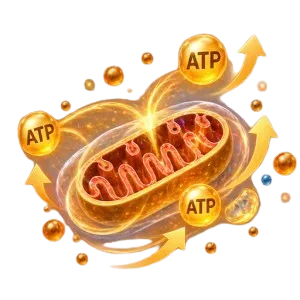
Energy production
Absorption drives ATP synthesis upward — the treated cell has more energy available for signaling and regulation.
03
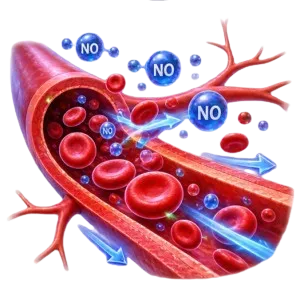
Signaling
The same event releases nitric oxide and a brief pulse of reactive oxygen species — signaling molecules that shift gene expression in the treated cell.
04
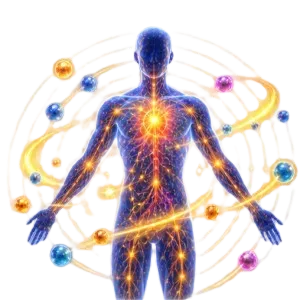
A response beyond the beam
These signaling mediators move beyond the treatment site, so measured effects aren’t confined to the spot under the laser — a systemic response to a local, precisely placed stimulus.
Handheld or scanner?
Match the format to the room.
The wavelength decides what the laser does; the format decides how it fits your day.
| Handheld | Stand-mounted scanner | |
|---|---|---|
| Delivery | Line-generated beams, placed by hand at the site in front of you | Three or four line-generating diodes on adjustable arms, positioned once |
| Provider time | Hands-on for the session | Hands-free — the protocol runs while you see the next patient |
| Best suited to | Point-precise work: neck, shoulder, extremities, room-to-room use | Larger regions and defined protocols: low back, plantar fasciitis, postoperative |
| Platforms | XLR8 · EVRL · GVL | FX 635 · FX 405 |
Most multi-provider clinics end up with one of each: a handheld that travels and a scanner that runs.
Where they’re used
Built for the practices that treat pain every day
01
Chiropractic
The handheld follows the adjustment on the same table; the FX scanner runs low back pain protocols while you adjust the next patient.
02
Sports and performance
Single-session ROM change in the training room, and repeatable musculoskeletal protocols between sessions.
03
Medical and integrative
Adjunctive, non-thermal pain relief inside the workflow you already run — cleared indications, prescription use.
04
Acupuncture
A precise stimulus and the body’s own response — photons instead of needles, on the same clinical logic.
Next step
Let’s map a system to your clinic.
Solo office, multi-provider group or integrated clinic — tell us how it runs.
Every system ships with onboarding and protocol support from our clinical team. Prescription use (21 CFR 801 Subpart D).