|

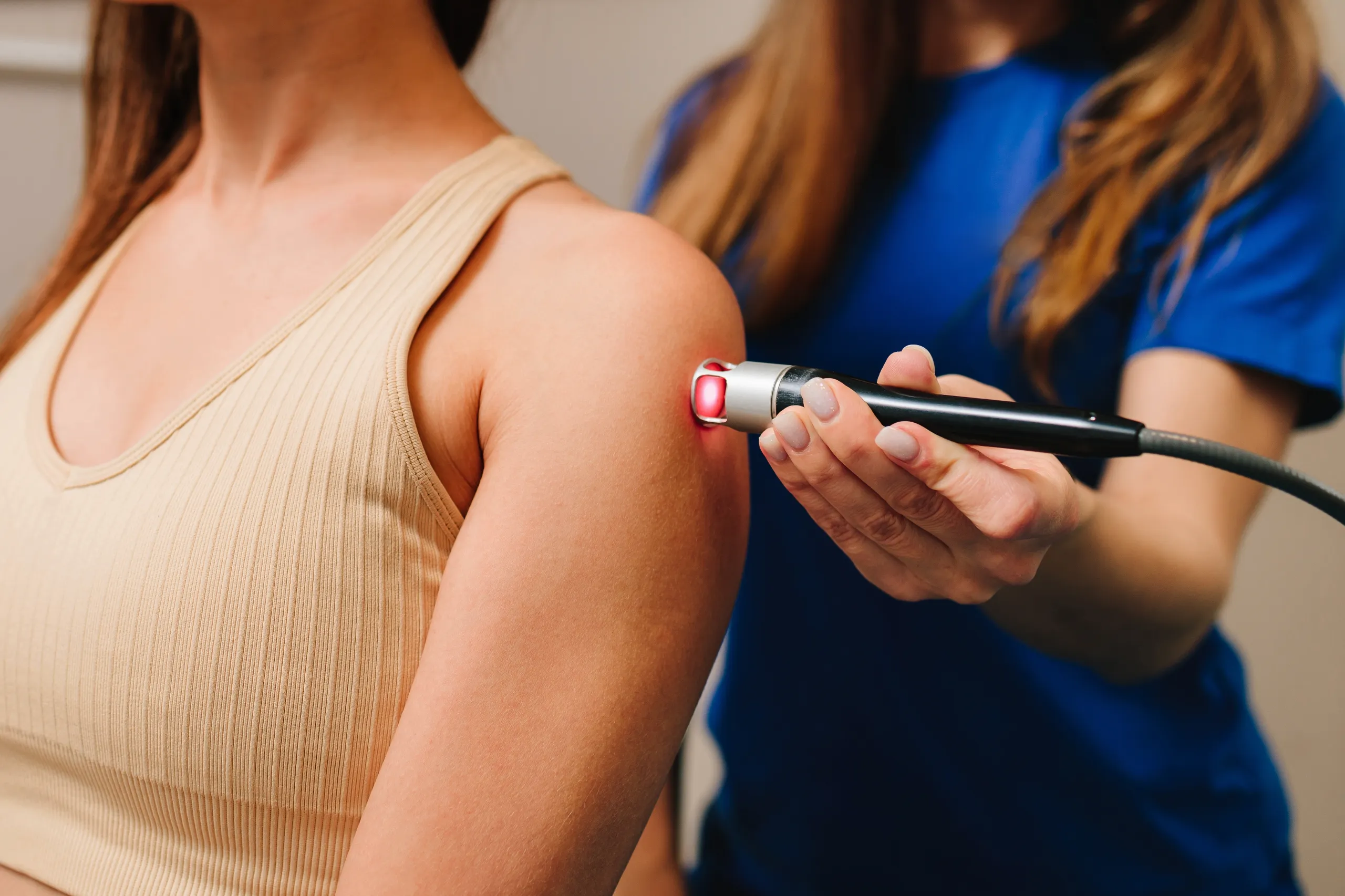
Modern rehabilitation clinics use a variety of treatment modalities to manage pain and support recovery, including laser therapy, therapeutic ultrasound, transcutaneous electrical nerve stimulation (TENS), and shockwave therapy. Although these therapies are often used for similar musculoskeletal conditions, they operate through different biological mechanisms and serve different clinical purposes.
Choosing the right modality depends on the patient’s condition, treatment goals, and available clinical evidence. In many cases, these therapies are not competing options but complementary treatments used together to support recovery.
This article compares laser therapy vs. ultrasound, TENS, and shockwave therapy, explaining how each works, what current research shows, and how clinicians determine the most appropriate treatment approach.. It also covers what to weigh when deciding which modality to add to your practice.
How Each Modality Works
Although laser therapy, therapeutic ultrasound, TENS, and shockwave therapy are all used to treat musculoskeletal conditions, they work in fundamentally different ways. Understanding these mechanisms helps explain why one modality may be more appropriate than another for a particular condition.
Laser Therapy
Laser therapy (photobiomodulation) uses low-level light to stimulate cellular activity. The light is absorbed by cells, where it is designed to support energy production (ATP), help reduce inflammation, and support tissue repair. Because it works through a photochemical process rather than heat, it is intended to support healing while helping relieve pain. Note that the term “laser therapy” covers both non-thermal cold lasers and heat-producing Class 4 lasers; this article focuses on low-level, non-thermal photobiomodulation.
Therapeutic Ultrasound
Therapeutic ultrasound uses high-frequency sound waves to create mechanical vibrations within tissues. Depending on the treatment settings, it may also produce thermal effects that increase tissue temperature, improve tissue extensibility, and enhance circulation before stretching or rehabilitation exercises.
TENS
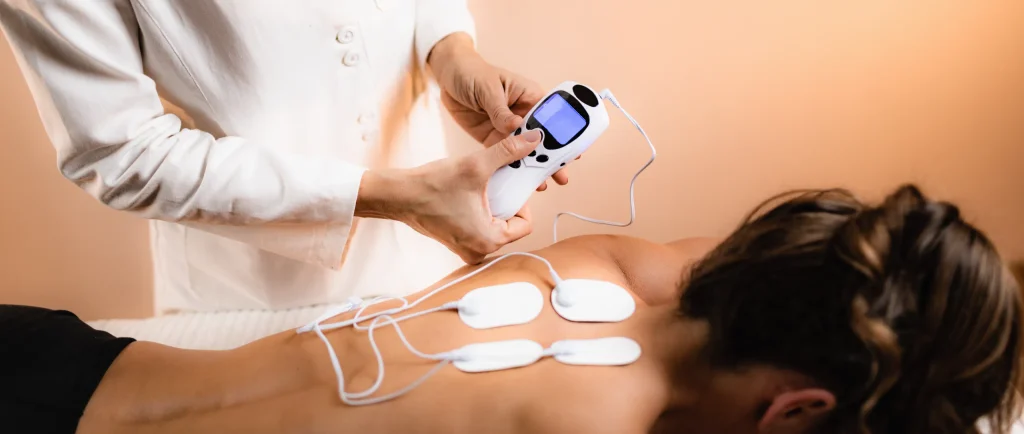
Transcutaneous electrical nerve stimulation (TENS) delivers low-voltage electrical impulses through electrodes placed on the skin. These impulses help modify how pain signals are transmitted to the brain, providing temporary pain relief without directly repairing damaged tissue.
Shockwave Therapy
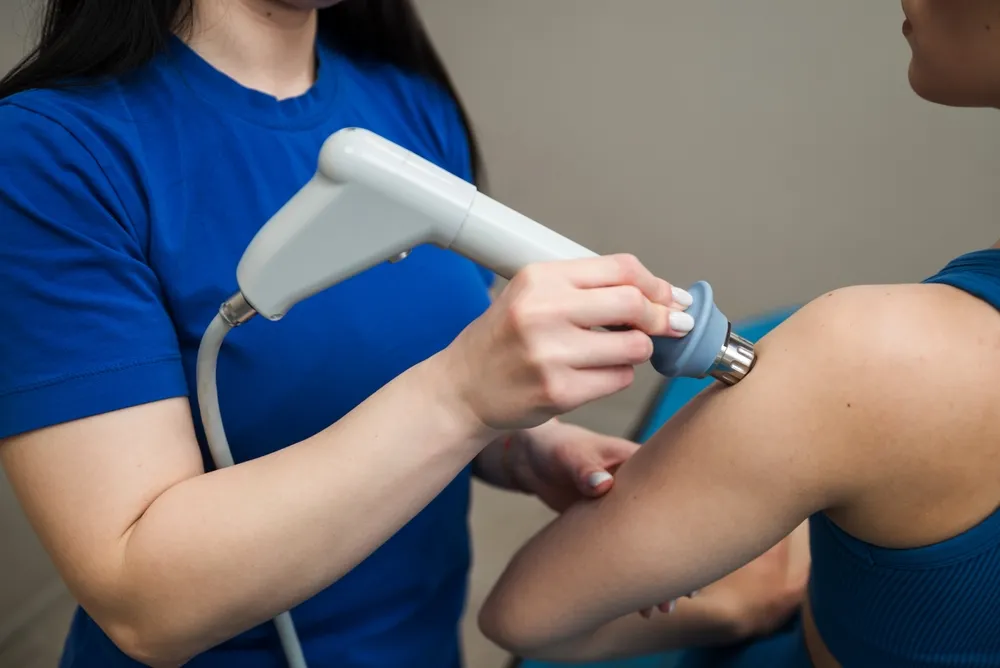
Shockwave therapy uses acoustic pressure waves to stimulate tissue remodeling and the body’s natural healing response. It is commonly used for chronic tendon disorders and other persistent musculoskeletal conditions, particularly when symptoms have not responded to other conservative treatments.
These distinct mechanisms mean that each modality has different strengths, limitations, and clinical applications, making treatment selection dependent on the patient’s diagnosis and rehabilitation goals.
Physical Therapy Modalities Comparison
The table below compares these modalities across key clinical features, including how they work, what they treat best, and the strength of the supporting evidence. The new “clinician hands-on time” row is added because staff time per treatment is one of the biggest differences between modalities from a practice standpoint.
| Feature | Laser Therapy (PBM/LLLT) | Therapeutic Ultrasound | TENS | Shockwave Therapy |
| Primary mechanism | Photochemical stimulation that supports cellular repair and reduces inflammation | Acoustic energy that produces mechanical effects and, in some cases, therapeutic heating | Electrical stimulation that modifies pain signal transmission | Mechanical acoustic pressure waves that stimulate tissue remodeling |
| Best used for | Pain, inflammation, tissue healing, tendinopathies, muscle and joint conditions | Soft tissue mobility, tissue extensibility, and rehabilitation | Short-term pain relief during rehabilitation | Chronic tendinopathies, plantar fasciitis, and calcific musculoskeletal conditions |
| How it works | Is designed to increase cellular energy (ATP) and support the body’s natural healing response | Improves tissue mobility through mechanical vibration and thermal effects | Activates sensory nerves to reduce pain perception | Triggers the body’s healing response through controlled mechanical stimulation |
| Strength of evidence | Moderate and growing; systematic reviews favor laser over placebo for tendinopathy and temporomandibular disorders, and head-to-head trials often favor laser over ultrasound | Mixed, with variable findings depending on the condition and treatment protocol | Moderate for temporary pain relief but limited evidence for tissue healing | Strong for selected chronic tendon disorders and calcific conditions |
| What treatment feels like | Painless with little or no sensation | Mild warmth or no noticeable sensation | Tingling or buzzing sensation | Repetitive tapping or pressure that may be uncomfortable |
| Typical session | 5 to 15 minutes | 5 to 10 minutes | 20 to 30 minutes | 10 to 20 minutes |
| Clinician hands-on time | Low; hands-free devices can run unattended once positioned | Continuous; the transducer must be kept moving for the whole session | Low after electrode placement | Continuous; handheld applicator |
| Common contraindications | Vary by device and treatment area; protective eyewear is required | Avoid over certain implants, malignancies, or pregnancy in specific treatment areas | Pacemakers, certain cardiac conditions, or impaired skin sensation | Bleeding disorders, active infection, certain fractures, or pregnancy over treatment areas |
| Primary goal | Support healing while reducing pain and inflammation | Improve tissue mobility and prepare tissues for rehabilitation | Provide temporary pain relief | Stimulate healing in chronic, slow-to-recover tissues |
What Does the Research Say?
The evidence supporting photobiomodulation (PBM) continues to grow across a range of musculoskeletal conditions. Although each modality has a role in rehabilitation, the strength of the supporting evidence varies by condition.
For tendinopathy, research increasingly favors laser therapy over therapeutic ultrasound. Systematic reviews have shown that low-level laser therapy can significantly reduce pain and improve function compared with placebo in conditions such as Achilles tendinopathy, lateral epicondylitis (tennis elbow), and rotator cuff tendinopathy. In contrast, evidence for therapeutic ultrasound remains mixed, with many randomized controlled trials reporting little or no long-term advantage over sham treatment or exercise alone. For a condition-by-condition look at tendon pain, see our guide to laser therapy for tendonitis.
Evidence also supports photobiomodulation for exercise recovery. A 2025 systematic review and meta-analysis of 19 clinical trials involving 672 participants compared photobiomodulation, neuromuscular electrical stimulation, and intermittent pneumatic compression for exercise-induced muscle soreness. Among the treatments evaluated, photobiomodulation was the only modality associated with a statistically significant reduction in muscle soreness, with the benefit seen when PBM was applied before exercise, although the authors rated the certainty of that evidence as low. The other two modalities showed no significant benefit. Read more about LLLT and recovery from common sports injuries.
Head-to-head comparisons also exist for temporomandibular disorders (TMD), one of the few conditions where laser, TENS, and ultrasound have all been tested against one another. A 2024 systematic review and meta-analysis of 12 randomized trials found that low-level laser therapy provided relatively more effective pain relief and improvement in mouth opening than TENS or therapeutic ultrasound. The advantage over TENS reached statistical significance, while the advantage over ultrasound was smaller. For chronic pain more broadly, a 2022 review concluded that the evidence for laser therapy as a stand-alone treatment is stronger than for low-intensity ultrasound, while noting that both can be useful in combination therapy.
Although treatment protocols vary between studies, the overall body of evidence continues to support laser therapy as a non-invasive option that may reduce pain, support tissue healing, and improve physical function. As with any intervention, treatment outcomes depend on the patient’s diagnosis, the treatment parameters used, and a comprehensive rehabilitation plan.
Evidence at a Glance by Condition
The table below summarizes the comparisons cited above. “Not assessed” means the cited review did not evaluate that modality for that condition, not that evidence is absent.
| Condition | Laser therapy | Therapeutic ultrasound | TENS | Shockwave therapy |
| Tendinopathy (Achilles, tennis elbow, rotator cuff) | Systematic reviews favor laser over placebo for pain and function | Mixed; little or no long-term advantage over sham or exercise in many trials | Short-term pain relief only | Strong for selected chronic tendinopathies |
| Temporomandibular disorders | Favored over TENS and ultrasound for pain and mouth opening in a 2024 meta-analysis | Comparable or weaker than laser in the same review | Weaker than laser for pain in the same review | Not a standard TMD modality |
| Exercise-induced muscle soreness | Low-certainty evidence of reduced soreness when applied before exercise (2025 meta-analysis) | Not assessed in the cited review | Not assessed; neuromuscular electrical stimulation showed no benefit in the same review | Not assessed in the cited review |
| Chronic pain, general | Stronger stand-alone evidence than low-intensity ultrasound (2022 review) | Less clear as a stand-alone treatment; may help in combination | Moderate for temporary relief | Condition specific |
Complementary, Not Competing
Although each modality works differently, they are often used together rather than as competing treatments. For example, TENS may provide temporary pain relief before exercise, ultrasound can help prepare soft tissues for rehabilitation, and shockwave therapy may be combined with laser therapy for selected chronic tendon conditions. Laser therapy also pairs naturally with chiropractic care and manual therapy, because it adds no heat or mechanical stress to tissue that has just been mobilized.
The most effective treatment plan depends on the patient’s diagnosis, rehabilitation goals, and clinical response rather than any single modality.
Choosing Equipment for Your Practice
When evaluating rehabilitation equipment, practices should consider more than the initial purchase price. Clinical evidence, patient outcomes, treatment versatility, workflow integration, patient comfort, and safety all contribute to long-term value.
Erchonia low-level laser systems deliver a non-thermal treatment that supports tissue healing without relying on therapeutic heat. This allows clinicians to treat a wide range of musculoskeletal conditions while minimizing the risk of heat-related tissue injury associated with thermal modalities. All Erchonia devices are Class 2 lasers; see laser classification for what that means in practice.
When comparing a cold laser against an ultrasound or TENS unit, four questions separate a good purchase from a shelf ornament. First, what is the device FDA cleared for? Each Erchonia laser is cleared for specific indications, and the clearance determines how the service can be marketed. Second, how much staff time does each treatment take? Hands-free devices such as the FX 635 laser, which is FDA cleared for chronic low back pain and chronic heel pain from plantar fasciitis, run unattended once positioned, while therapeutic ultrasound requires a clinician to keep the transducer moving for the entire session. Third, which conditions does your practice see most? Handheld devices such as the EVRL laser and the cordless XLR8 laser suit back, neck, and shoulder work and can share a treatment room with existing modalities. Fourth, what does the evidence say for those conditions? Our guides to choosing a low-level laser therapy device and comparing the cost of LLLT to other treatments walk through the numbers, and the benefits of implementing laser therapy in your practice covers workflow and patient demand.
Practices interested in learning more about laser technologies can explore our articles on the difference between hot and cold laser therapy, true lasers vs. LEDs, and visible vs. infrared lasers to better understand how these technologies differ and their clinical applications.
Conclusion
Laser therapy, therapeutic ultrasound, TENS, and shockwave therapy each have a role in musculoskeletal rehabilitation. Rather than competing treatments, they are often used together to address different aspects of recovery.
Current evidence continues to support photobiomodulation as a non-invasive option with growing evidence for reducing pain, supporting tissue healing, and improving function. However, the most appropriate treatment depends on the patient’s condition, treatment goals, and the clinician’s assessment. Clinicians ready to compare devices can contact Erchonia; patients can find an Erchonia provider near them.
Frequently Asked Questions
1. Is laser therapy better than ultrasound?
For many musculoskeletal conditions, current evidence favors laser therapy over therapeutic ultrasound, particularly for tendinopathy and temporomandibular disorders, although the best choice depends on the condition being treated.
2. What’s the difference between a cold laser and a TENS unit?
Cold laser therapy supports tissue healing by reducing inflammation and stimulating cellular repair, whereas a TENS unit provides temporary pain relief by modifying pain signals. . Learn more about how laser therapy works for pain.
3. Does shockwave therapy hurt more than laser therapy?
Yes. Shockwave therapy may cause temporary discomfort because it uses mechanical pressure waves, while laser therapy is generally painless.
4. Can physical therapy modalities be combined?
Yes. Laser therapy is often combined with TENS, therapeutic ultrasound, exercise therapy, or manual therapy as part of a rehabilitation plan.
5. How do clinicians choose the right treatment modality?
Treatment depends on the diagnosis, clinical evidence, treatment goals, and the patient’s individual needs.
Q6. Can a clinic replace therapeutic ultrasound with laser therapy?
Some practices do, particularly for tendinopathy and pain-focused visits where the evidence favors laser. Others keep ultrasound for warming tissue before stretching and add laser for non-thermal healing support. The decision should follow the conditions the practice treats, the FDA-cleared indications of the device, and staff time per treatment. See our guide to choosing a low-level laser therapy device.
Q7. How long does a laser therapy session take compared with other modalities?
Laser therapy sessions typically run 5 to 15 minutes, therapeutic ultrasound 5 to 10 minutes, TENS 20 to 30 minutes, and shockwave 10 to 20 minutes. Hands-free laser devices can run unattended once positioned, which frees staff time.


