|

Carpal tunnel syndrome (CTS) is one of the most common nerve compression conditions affecting the hand and wrist. It occurs when the median nerve is compressed within the carpal tunnel, leading to pain, numbness, tingling, and weakness in the hand.
In many cases, symptoms start gradually and are often linked to repetitive hand use, prolonged wrist flexion, medical conditions like diabetes, or occupational strain. If not managed early, CTS can progress and begin to interfere with daily activities such as writing, lifting, and gripping objects.
In recent years, there has been increasing interest in conservative and non-surgical approaches. Low-level laser therapy (LLLT), also known as photobiomodulation, is being explored as a supportive treatment option alongside standard care for carpal tunnel.
Understanding Carpal Tunnel Syndrome
Carpal tunnel syndrome occurs when pressure builds on the median nerve as it passes through a narrow passage in the wrist called the carpal tunnel. This nerve is responsible for sensation in the thumb, index, middle, and part of the ring finger, as well as certain hand movements. When compressed, nerve signaling becomes disrupted, resulting in characteristic sensory and motor symptoms.
Common causes include repetitive wrist movements, prolonged device use, pregnancy-related fluid retention, diabetes, thyroid disorders, and wrist injuries or inflammation. These factors can increase pressure in the carpal tunnel and gradually worsen nerve function.
Typical symptoms include:
- Numbness or tingling in the thumb, index, and middle fingers
- Night-time hand pain or burning sensation
- Weak grip strength
- Difficulty holding objects or performing fine motor tasks such as buttoning or holding small objects
If left untreated, CTS can progress to muscle weakness and permanent nerve dysfunction, which is why early intervention matters.
Most cases of CTS are initially managed conservatively. Surgery is typically reserved for severe or refractory cases. The 2024 clinical practice guideline from the American Academy of Orthopaedic Surgeons (AAOS) emphasizes conservative approaches, such as splinting, steroid injections, and activity modification, before considering surgery.
However, outcomes from conservative care vary, and recurrence is common. This has increased interest in photobiomodulation carpal tunnel therapy, also known as low-level laser therapy (LLLT).
What Is Low-Level Laser Therapy for Carpal Tunnel?
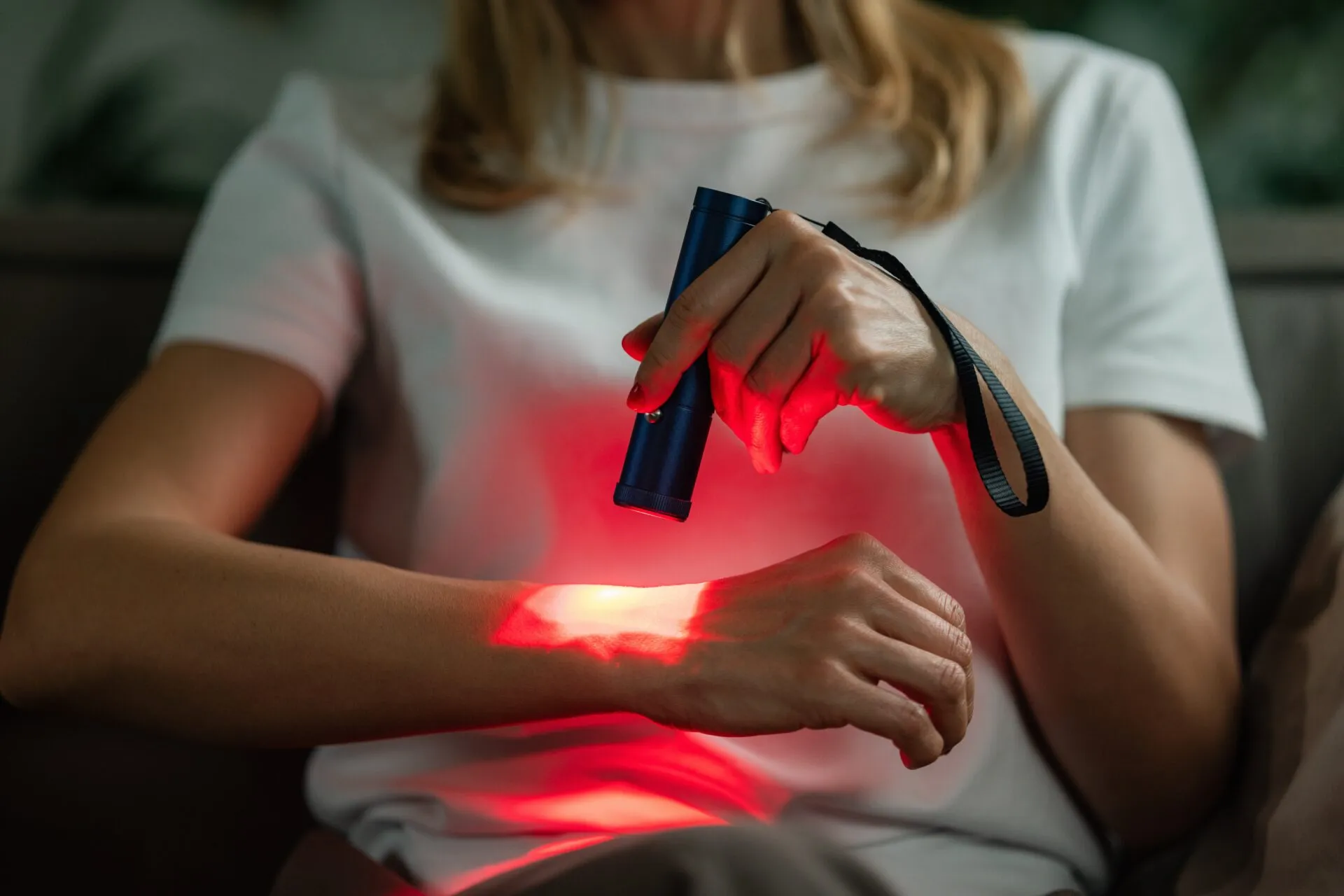
Low-level laser therapy (LLLT) for carpal tunnel is a non-invasive treatment that uses specific wavelengths of light to stimulate tissue repair and reduce nerve inflammation.
Unlike surgical lasers, LLLT does not cut or heat tissue. Instead, it works at a cellular level to improve nerve function and reduce pain. This approach is part of a broader category called photobiomodulation (PBM)
It is typically considered for:
- Mild to moderate carpal tunnel syndrome
- Early-stage nerve irritation
- Patients seeking non-invasive adjunct therapy
- Cases where splinting or physiotherapy alone is insufficient
Severe CTS with muscle wasting or significant nerve damage may still require surgical decompression.
How Low-Level Laser Therapy Improves Carpal Tunnel Syndrome Symptoms
Low-level laser therapy for carpal tunnel syndrome (CTS) works through photobiomodulation, where light influences cellular and nerve function without causing tissue damage. Evidence from clinical studies suggests several key mechanisms that may explain symptom improvement in mild-to-moderate cases.
Nerve Regeneration Support
Photobiomodulation may enhance mitochondrial activity in nerve cells, increasing ATP production. This improved cellular energy supports repair processes in the compressed median nerve. Research in clinical trials suggests this mechanism may contribute to gradual improvement in nerve function over time.
Reduced Inflammation Around the Median Nerve
Inflammation is a major factor in carpal tunnel pressure. Studies on low-level laser therapy for CTS show potential reduction in inflammatory mediators, which may help decrease swelling in the carpal tunnel and relieve nerve compression.
Improved Microcirculation
Evidence from photobiomodulation research indicates improved local blood flow in treated tissues. Better microcirculation helps reduce edema and supports oxygen and nutrient delivery to affected nerve structures, promoting recovery conditions.
Pain Modulation
Randomized controlled trials report reduced pain scores and improved hand function in patients receiving LLLT. Systematic reviews also note better grip strength and functional outcomes compared to controls.
Overall, findings suggest LLLT may provide supportive benefits, especially when combined with splinting and other conservative treatments, although protocols and outcomes vary across studies.
What to Expect From a Laser Therapy Session for Carpal Tunnel
A low-level cold laser plan for carpal tunnel syndrome usually follows a structured, outcome-based approach, although exact protocols vary by clinic.
Typical treatment parameters include:
- Frequency: 2–5 sessions per week initially
- Duration: 3–8 weeks depending on severity
- Session time: 5–20 minutes per wrist
- Method: handheld probe applied along the carpal tunnel region
- Combination therapy: often paired with splinting or physiotherapy
Progress is regularly reassessed using:
- Pain scales
- Grip strength testing
- Functional hand use assessments
- Nerve conduction studies (in selected cases)
This structured monitoring is important because response to low level laser therapy CTS treatment varies between individuals, especially across different severity levels.
Comparison of Treatment Options for Carpal Tunnel Syndrome
Carpal tunnel syndrome is managed through several conservative and medical treatments, each with different roles in symptom control and long-term outcomes.
| Treatment | Role in care | Evidence and limitations |
| Wrist splinting | Common first-line option; keeps the wrist neutral, mainly for night-time symptoms | Widely recommended, though long-term evidence is limited; does not directly address inflammation |
| Corticosteroid injection | Short-term relief by reducing swelling around the median nerve | Effective short term; symptoms often return and repeated use is limited |
| Physiotherapy / nerve gliding | Nerve mobilization and ergonomic correction to support function | Supports long-term function but depends on consistent patient participation |
| Therapeutic ultrasound | Adjunct intended to support soft-tissue healing | Evidence for sustained CTS improvement is mixed |
| Low-level laser therapy (LLLT) | Non-invasive, non-thermal adjunct targeting inflammation and nerve recovery | Some short-term pain and function benefit; effects often diminish and add limited value over splinting; AAOS 2024 found no long-term benefit |
| Surgery (carpal tunnel release) | Definitive option for severe or refractory cases | Reserved for severe CTS or when conservative care has failed |
Wrist splinting is typically the first-line option. It helps reduce night-time symptoms by keeping the wrist in a neutral position, but it does not directly address inflammation.
Corticosteroid injections provide faster, short-term relief by reducing swelling around the median nerve. However, symptoms may gradually return, and repeated use is limited.
Physiotherapy focuses on nerve gliding exercises and ergonomic correction. It supports long-term function but requires consistent patient participation to be effective.
Therapeutic ultrasound is used to support soft tissue healing, although evidence for sustained improvement in CTS remains mixed.
Low-level laser therapy (LLLT) is non-invasive and painless. It targets inflammation and supports nerve recovery pathways. Current evidence suggests it is most effective as an adjunct to standard conservative care rather than a standalone treatment.
Safety and Patient Selection for Carpal Tunnel Laser Therapy
Low-level laser therapy is generally safe when performed by trained professionals. Side effects are rare and may include mild warmth or temporary symptom fluctuation.
It is used cautiously in:
- Severe CTS with advanced nerve damage
- Cases requiring urgent surgical decompression
- Unclear or undiagnosed neuropathy
Best candidates include:
- Mild to moderate CTS
- Early-stage symptoms
- Patients avoiding or delaying surgery
- Those combining treatment with splinting or physiotherapy
Poor candidates or caution cases:
- Severe CTS with muscle atrophy
- Advanced nerve damage confirmed on EMG/NCS
- Persistent symptoms despite conservative care
In severe cases, laser therapy may still be used as an adjunct, but not as a primary treatment.
Conclusion
Carpal tunnel syndrome is a common nerve compression condition that can worsen without early and appropriate care. While splinting, physiotherapy, and injections remain standard treatments, results vary depending on severity.
Low-level laser therapy (LLLT) offers a non-invasive supportive option that may help reduce pain, inflammation, and improve hand function, especially in mild to moderate cases. Evidence suggests it works best when combined with conventional care rather than used alone.
Overall, LLLT is a complementary tool within a broader, structured treatment plan, not a replacement for established medical management.
To learn more about clinical laser systems or find an Erchonia provider near you, contact Erchonia.
FAQs
- Is laser therapy effective for carpal tunnel syndrome?
Evidence suggests low-level laser therapy can reduce pain and improve function in mild to moderate CTS, especially when combined with splinting.
- How many sessions are needed?
Protocols vary, but a typical course runs about 2 to 5 sessions per week over 3 to 8 weeks, depending on severity and response.
- Can it replace surgery?
No. It is a conservative option. Severe or advanced cases still require surgical decompression.
- Does laser therapy permanently cure CTS?
It may reduce symptoms and improve nerve function, but recurrence depends on underlying causes and lifestyle factors.
- Is the treatment painful?
No. It is non-invasive and painless.


